Building Connection Through Everyday Moments

“Tell me about the best part of your day!” 😊
Life can be busy, but some of the most important moments for a child’s well-being happen during everyday conversations. Whether it’s chatting on the walk to school, talking over dinner, drawing together, or sharing a story before bed, these small moments help children feel valued, heard and understood.
Children do not always say, “I’m worried” or “I’m feeling sad.” Instead, their thoughts and feelings often come out naturally when they feel relaxed and connected to the adults around them.
Try swapping “How was school today?” for questions like:
⭐ What made you smile today?
⭐ Did you help someone today?
⭐ What was the most interesting thing you learned?
⭐ Was anything tricky today?
⭐ What are you looking forward to tomorrow?
These simple questions can open the door to meaningful conversations and help children build confidence in talking about their feelings.
For children, knowing that a trusted adult is ready to listen can make a huge difference. For parents, remember that you do not need to have all the answers. Sometimes, listening carefully, showing interest, and spending a few extra minutes together is all a child needs.
So this week, challenge yourself to create a little “chat time” each day. You might be surprised by the wonderful stories, ideas and feelings your child chooses to share.
💛 A few minutes of conversation can make a lasting difference to a child’s well-being.
BE A HEALTHY HERO

🌟 Meet Sleepy Sam and Crunchy Chloe! 🌟
Be a Healthy Hero every day!
Hello everyone! 👋
Today we are excited to introduce two special friends who can help us learn how to look after our bodies and feel our best…
💤 Sleepy Sam?
Sleepy Sam loves bedtime, cosy stories and getting a good night’s sleep so that every morning feels like a fresh adventure! Sleepy Sam knows that sleep helps our brains grow, our bodies recharge, and our moods stay positive.
😴 Sleepy Sam’s Top Tips for Super Sleep:
- Go to bed at the same time every night
- Enjoy a calm bedtime routine (like reading a story 📖)
- Turn off screens at least 1 hour before bed
- Make your bedroom quiet, dark and cosy
- Take slow, calm breaths if your mind feels busy
💡 When we sleep well…
➡️ We are ready to learn
➡️ We can focus better
➡️ We feel happier and calmer
🥕 Crunchy Chloe?
Crunchy Chloe loves healthy food, busy days and helping friends! Chloe knows that good food gives us energy to play, learn and grow strong.
She especially loves crunchy fruits and vegetables, just like the apple 🍏 and carrot 🥕 she is holding!
🍎 Crunchy Chloe’s Top Tips for Healthy Eating:
- Eat a rainbow of fruits and vegetables 🌈
- Try something new each week
- Drink plenty of water 💧
- Choose foods that help your body grow strong
- Remember: treats are okay, but balance is key!
💡 When we eat well…
➡️ We have more energy
➡️ Our bodies stay strong
➡️ Our brains work better
🌟 What happens when we make healthy choices?
When we listen to Sleepy Sam and Crunchy Chloe…
💤 We sleep better
🍎 We eat well
💧 We stay hydrated
⚡ We have more energy
😊 We feel happy!

Flip The Switch!
🔌 The Great Analog Summer: Swapping WiFi for Wellies
Remember the feeling of grass between your toes, the specific smell of a new box of felt-tips, or that long, drizzly afternoon that somehow turned into an epic living room fort-building championship?
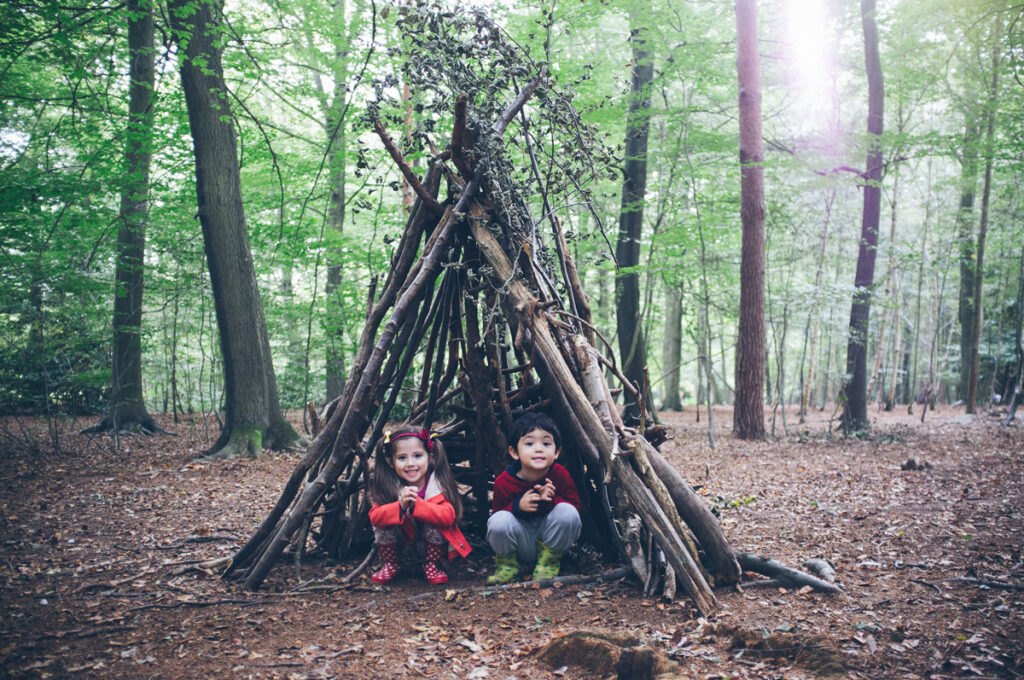
Lately, our summers have started to sound a bit more like iPad pings and the “Are you still watching?” Netflix prompt. While we’d be lost without Google Maps to find the nearest coastal car park, we’re feeling the itch to disconnect. This year, go “Analog.” Essentially, it’s called an Analog Summer because you are choosing to live in “high definition” in the real world instead of through a screen.
This isn’t about banning Minecraft forever or being “anti-tech”—it’s about being “pro-connection.” It’s about trading the blue light for the golden hour (when the British sun finally decides to show up!) and the scroll bar for a sketchbook.
We challenge you to embrace a family digital detox challenge designed to lower the volume on the digital world and turn up the volume on real-life adventures—the kind that usually end with muddy knees and a very tired dog.
SMART GOALS
SMART goals are a great way to boost your well-being by building self esteem, confidence and resilience.
Breaking big tasks into manageable steps, fosters a sense of accomplishment, responsibility, improves problem-solving, and gives you purpose; reducing stress and improving mood.
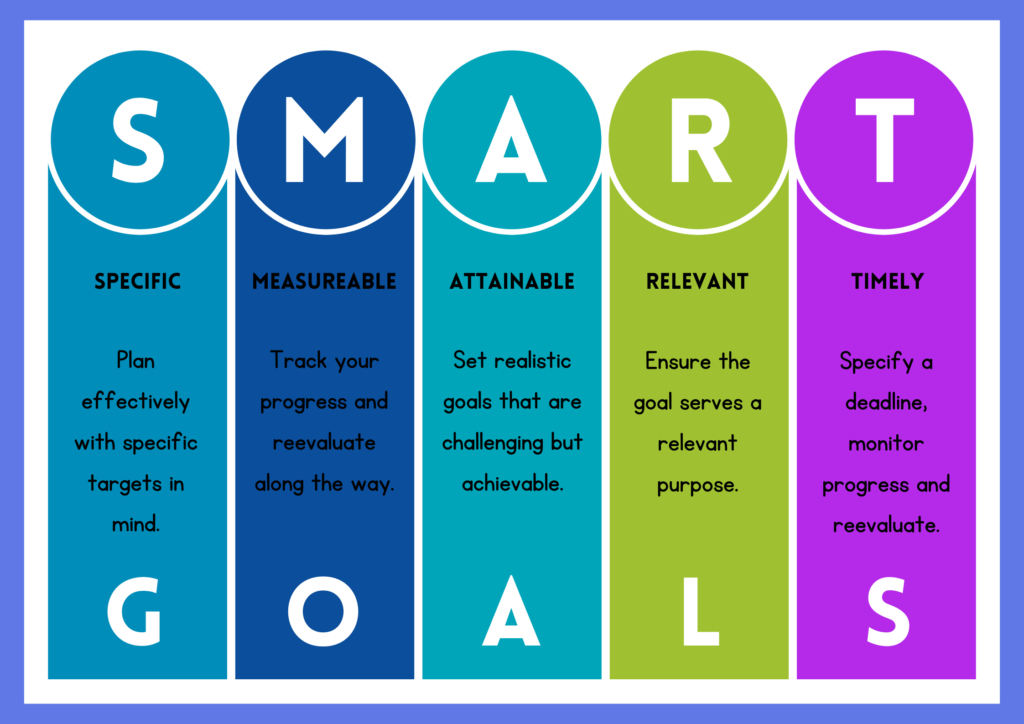
SMART goals for kids are Specific, Measurable, Achievable, Relevant, and Time-bound goals that help you create clear plans for learning, social, or personal growth, like “I will read for 15 minutes every day for the next month to improve my reading fluency,” breaking down big ideas into actionable steps for motivation.
SMART Goal Breakdown
Specific: Clearly define what needs to be done (e.g., “I will learn my times tables,” not “I want to get better at math”).
Measurable: Track progress with clear metrics (e.g., “master 10 new vocabulary words this week”).
Achievable: Ensure the goal is realistic for the child’s age and abilities (e.g., 30 mins daily is doable, not 3 hours).
Relevant. Make sure it matters to the child’s overall development (e.g., improving reading for confidence).
Time-bound: Set a deadline to maintain focus (e.g., “by the end of the month or term”).
Examples for Kids
Learning: “I will practice my spelling words for 10 minutes each night for two weeks so I can get 90% or higher on my next spelling test”.
Behaviour: “I will tidy my desk every evening before dinner for the next month so my bag is always organised”.
Social: “I will ask one new person to play with me at break time each day for the next two weeks to make new friends”.
Health/Habits: “I will drink water instead of squash at lunch every day this week to feel more energetic”.

Looking for GLIMMERS!
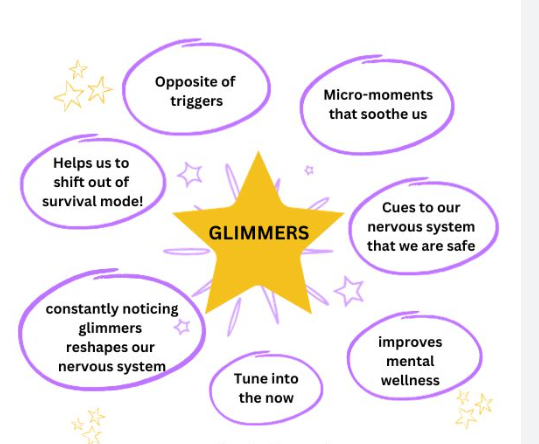
You’ve heard of triggers that make you feel unhappy, sad, angry. But if there was an opposite that made you calm, even joyful? This is where glimmers come in.

We are so busy looking for what is wrong in our lives, we can miss what is positive.

✔ Glimmers help build emotional strength, making it easier to handle challenges.
✔ Glimmers keep you focused on the present, reducing feelings of anxiety.
✔ Glimmers help you to have positive thoughts!
✔ Looking for glimmers helps train your brain to notice and enjoy joyful moments in daily life!
✔ Over time, noticing glimmers can grow your sense of gratitude, which supports your happiness. and mental health!

Glimmers are small grounding moments that make you smile
✔ Sight: seeing a friend
✔ Sound: the sound of rain
✔ Smell: the smell if the seaside
✔ Touch: the cool feel of water when you jump in the pool
✔ Taste: something yummy
✔ Connection: a hug from a loved on
✔ Nature: spotting a rainbow
How to find your own glimmers
The beauty of glimmers is that they’re personal. There’s no universal formula, but if you want to start spotting them, here’s what to try:
- Tune into your senses: What sounds, scents, textures or tastes bring you a subtle sense of peace or joy?
- Notice your body: A glimmer might show up as your shoulders dropping, your breathing slowing or even a quiet smile.
- Start a ‘glimmer list’: Jot down small moments that made you feel soft, connected or safe. Even noticing one or two a day can help rewire your awareness.
- Don’t chase big feelings: This isn’t about euphoric highs. It’s about the tiniest shifts that gently recalibrate your mood.
Being mindful
What is mindfulness and why do kids need it?
Mindfulness is paying attention, noticing what’s happening outside of you, as well as your thoughts and feelings, and letting it all be as it is. It’s a skill that helps us cope with big emotions and challenging experiences and, just like a muscle, it’s something we can all build with practice.
Mindfulness is an especially useful tool for helping children manage the potential stresses and anxieties of moving through the developmental stages from infants and toddlers through to school age and adolescence. As well as helping kids to reduce levels of depression and stress, it is also thought to help increase their focus and attention, as well as compassion.
10 easy mindfulness exercises for kids and parents
1. Visualise your safe place – to feel grounded
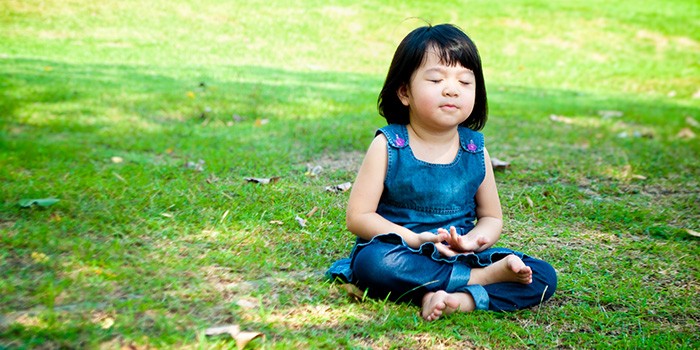
Help kids find calm and focus with our simple mindfulness activities, think about where are your favourite soothing places in nature? You can visit them anytime in your mind. You could write a journey to your calm safe place, describing with all your senses how it feels to be there.
2. Balloon belly breathing – to soothe

Lie down somewhere comfy and imagine there is a balloon in your tummy. As you breathe in, imagine the balloon slowly inflates. As you breathe out, the balloon effortlessly deflates. Children can rest their favourite toy on their tummy and let them go along for a calming ride.
3. Warrior pose – for confidence and concentration

Stand up tall with your feet wide apart. Turn your right toes out and press your left heel away. Bend your right knee deeply, stretch your arms out at shoulder height and make like a surfer. Hang ten for a few relaxed breaths, feeling the strength of your body, then shake out your legs and try it out on the other side. This is a great distractor from worried thoughts.
4. Sound meditation – to fuel curiosity
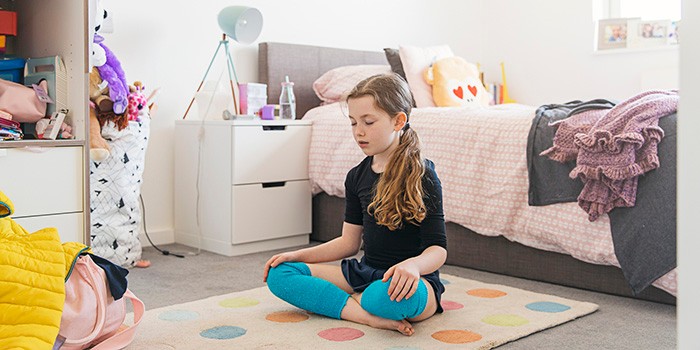
Introduce a peaceful pause to your child’s day with our kids mindfulness activities. Snuggle down somewhere safe, close your eyes and listen to all the sounds around you. What can you hear? The clink of coffee cups, snippets of conversation, sounds from nature? Get curious and feel the buzz of life around you.
5. Savour your food – to encourage gratitude
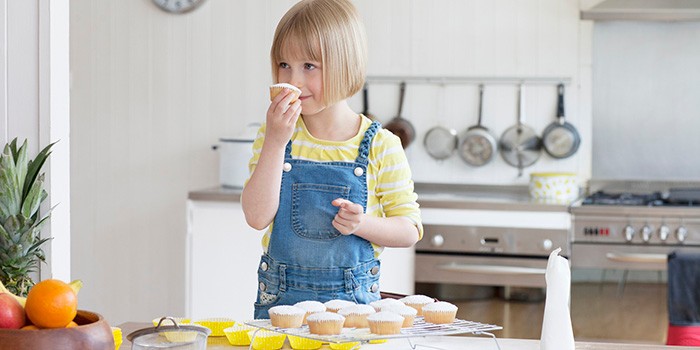
Find calm and focus easily with our simple mindfulness kids activities, like the next time you have your favourite treat, make it a ritual of happiness and thanks. Don’t let a second of pleasure pass you by unnoticed – the scent, how it feels in your hand, against your lips, the flavour on your tongue, the texture as you chew and the sensation as you finally swallow it. Even more delicious when you savour it!
6. Embrace music – to switch up your mood
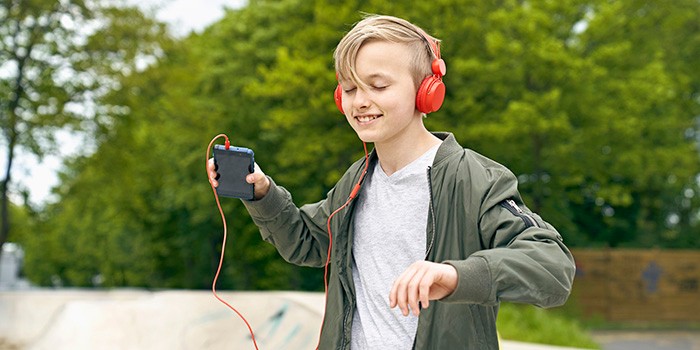
Harness the mood boosting power of music by making your own playlists – one that helps you feel peaceful, one to help you focus and another to give you a feel-good hit. A good old sing always lifts the spirits, too.
7. Make your mind garden beautiful – to grow happy thoughts
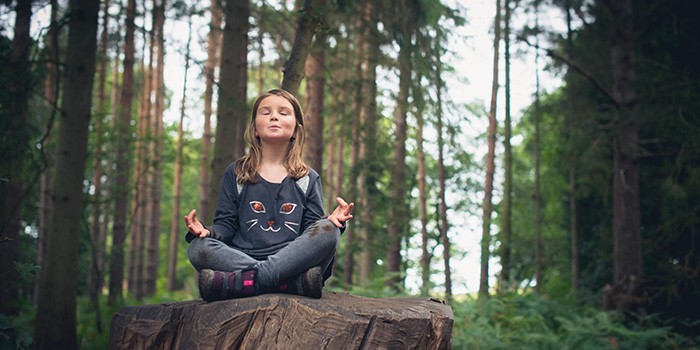
There is a garden in your mind, made by all your thoughts. Thoughts you enjoy plant the seeds for flowers you love. Worries or nasty thoughts plant the seeds for weeds. Now every garden has weeds so it’s not about eliminating unhappy thoughts, but you can choose where you direct the sun and water by nurturing the thoughts that help you feel good. It all comes down to where you place your attention so choose wisely to grow a beautiful mind garden.
8. Legs up the wall – to soften and drop

Grab a blanket and a pillow, take a seat with your side against the wall and enjoy some time out. Roll onto your back, slide your legs up the wall, arrange the pillow under your head and drape the blanket over you for comfort. Now let your body flop and drop, the whole length of your legs held by the wall. There is nothing to be done right now and nowhere else to be.
9. Get creative – to express yourself

Let your feelings out with a spot of art. The choice is yours! You can journal, colour a mandala, make a model from recycling, paint up a storm or make your own animation on Scratch. Enjoy immersing yourself in the act of being creative – no hard work, just fun.
10. Hug it out – to feel connected

Cuddles are like food for the soul, helping us feel safe and calm. Enjoy building your mindfulness muscles by giving a loving hug your full attention. Can you feel your heart beating, wrapped up in care? Tell yourself or your child: you are safe, you are loved, you are held.
https://www.bbcgoodfood.com/health/family-health/10-mindfulness-exercises-kids
Children’s Mental Health Week 2025
Know your Emotions
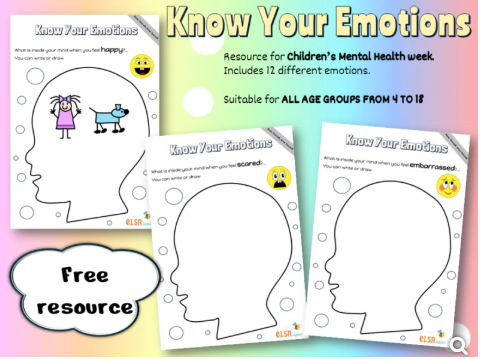
https://www.elsa-support.co.uk/wp-content/uploads/2025/01/Know-yourself-Emotions.pdf
Understanding emotions is a key part of knowing yourself and building emotional intelligence. This fun and creative activity helps children explore their feelings and identify what causes them in their daily lives.
This resource has been designed to support Children’s Mental Health Week 2025, with the theme “Know Yourself, to Grow Yourself”. It encourages self-awareness and reflection, helping children think about their emotions as an important step toward personal growth and well-being.
The sheet includes a blank head shape for children to fill with their ideas. There are 12 emotions, each paired with a small emoji to make the activity engaging and easy to understand. Children can personalise their work by using drawings, words, and colours, making the activity both meaningful and enjoyable.
How to use this – Know your Emotions activity:
Look at the emotion written next to each blank head.
Think about what makes them feel that emotion—situations, people, places, or experiences.
Use the head shape to draw, write, or colour their ideas. Be creative! They might include a mix of images, words, or even patterns that represent their feelings.
Remember, there are no wrong answers—this is about their personal experiences and how they connect with each emotion.
This activity is suitable for all ages, from young children to teens. It encourages self-reflection, creativity, and open conversations about feelings. It can also be a great tool for group discussions or one-on-one support sessions. By completing this activity, children will explore the theme “Know Yourself, to Grow Yourself” in a hands-on, engaging way, building a deeper understanding of their emotions and the things that influence them.
Use this resource to inspire growth, promote emotional awareness, and spark meaningful conversations about mental health.
Merry Christmas!
Hello everyone,
If you want to countdown to Christmas, look at these fabulous resources on ELSA support.

Summer Holiday!!
Try some activities this Summer at this website, click the link
https://www.elsa-support.co.uk/category/free-resources/

5 Ways to Wellbeing

Looking after your family’s wellbeing is really important. Families all need some help from time to time due to life changes or events.
As a parent/carer you can take small steps to help your child’s wellbeing as well as your own/ You can do this by starting with the basics.
Consider one area at a time, think about your home environment and what small changes you can make together as a family.
Using the BACK to BASICS approach can empower you to take control of the 5 Ways of Wellbeing.
Think of it as building the foundations of a house; making sure your family has all the basics in place. For example, eating healthily, sleeping, exercising, good routines and looking after ourselves and our children’s wellbeing. If foundations are not in place there is a risk of cracks appearing.
Recent Comments