SMART GOALS
SMART goals are a great way to boost your well-being by building self esteem, confidence and resilience.
Breaking big tasks into manageable steps, fosters a sense of accomplishment, responsibility, improves problem-solving, and gives you purpose; reducing stress and improving mood.
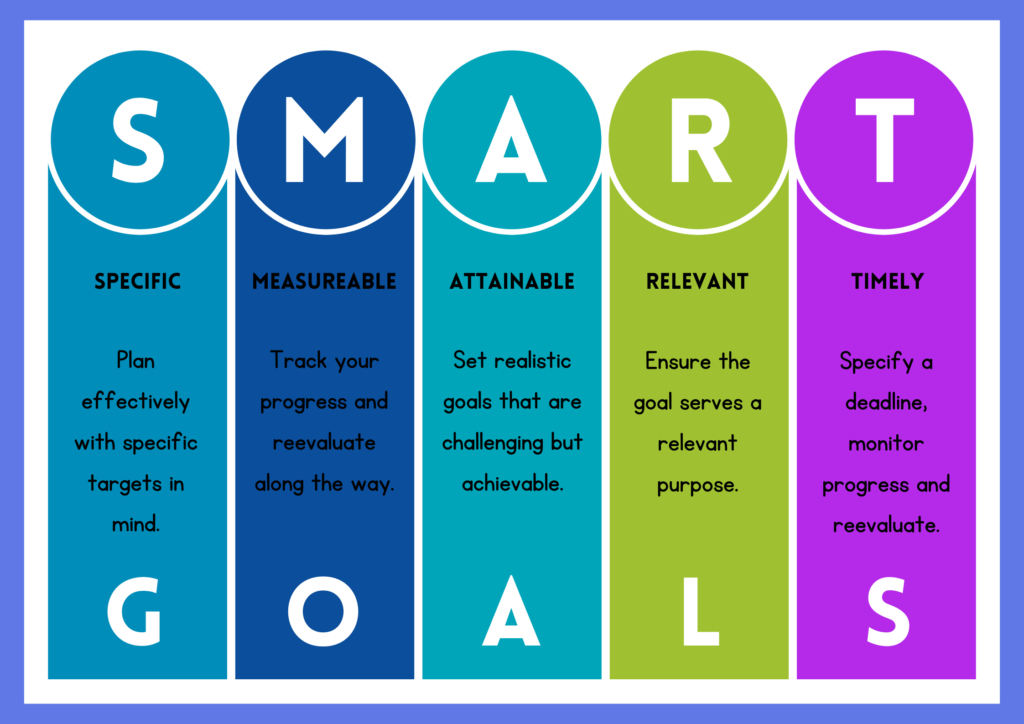
SMART goals for kids are Specific, Measurable, Achievable, Relevant, and Time-bound goals that help you create clear plans for learning, social, or personal growth, like “I will read for 15 minutes every day for the next month to improve my reading fluency,” breaking down big ideas into actionable steps for motivation.
SMART Goal Breakdown
Specific: Clearly define what needs to be done (e.g., “I will learn my times tables,” not “I want to get better at math”).
Measurable: Track progress with clear metrics (e.g., “master 10 new vocabulary words this week”).
Achievable: Ensure the goal is realistic for the child’s age and abilities (e.g., 30 mins daily is doable, not 3 hours).
Relevant. Make sure it matters to the child’s overall development (e.g., improving reading for confidence).
Time-bound: Set a deadline to maintain focus (e.g., “by the end of the month or term”).
Examples for Kids
Learning: “I will practice my spelling words for 10 minutes each night for two weeks so I can get 90% or higher on my next spelling test”.
Behaviour: “I will tidy my desk every evening before dinner for the next month so my bag is always organised”.
Social: “I will ask one new person to play with me at break time each day for the next two weeks to make new friends”.
Health/Habits: “I will drink water instead of squash at lunch every day this week to feel more energetic”.

Recent Comments