Friday 10th July 2020
Hello everyone,
Somehow, strangely, we are looking ahead to our final week of the academic year. This will be the last Home Learning blog from us. We really appreciate the effort that you have all put into Home Learning and would encourage you to revisit our past blog posts over the summer to undertake any missed activities. Oaks Academy is also continuing and lessons remain live too.
To mark the end of Year 3, we are going to have a final Sum Dog competition to find the ultimate, ULTIMATE champion class. Lions and Hippos are tied on one win each, so this is the tie-breaker. You have from Monday until 3pm on Friday. Good luck!
So… here is your final Home Learning of 2019/2020!
WELL BEING: Continue with mind yeti.
Try one or more of these activities once a day for the next week.
- Lie with your back on the floor and place a soft toy on your tummy. Breathe in and out slowly and deeply and try and concentrate on the way your toy rises and falls with your breathing.
- Choose a subject to focus your thoughts or simply write about whatever arises in your mind for 5 minutes.
- Take a walk and concentrate on teha ct of walking. What movements foes each leg perform in each stride? Which part of your foot hits the ground first? What does the ground feel like underneath your shoe/foot?
- If you have any worries – write them on pieces of paper. Then when you’re finished, rip the paper up and throw them away – throwing your worries away with them
- Blow bubbles – concentrating on the way they expand and then float away.
We’ve really enjoyed hearing all about your family time during lockdown. Sometimes, when we spend a lot of time with the same people, we can get on each others nerves. Try the following activity as a way of reminding yourselves and your fabulous family, how much you love them.
- Draw round your body or draw the outline of your family member on a piece of paper. Fill that paper with all the things you love about that person and give it to them to read. Encourage all the people you live with to do this for each other. We bet it’ll put lots of smiles on your faces.

Topic:
Here are some fun Chinese craft ideas to end our china topic!
Chinese drum-
https://www.activityvillage.co.uk/chinese-drum-craft
Chinese fan-
https://www.activityvillage.co.uk/chinese-fan-craft
Chinese slat book-
https://www.activityvillage.co.uk/chinese-slat-book


SPAG: Spelling


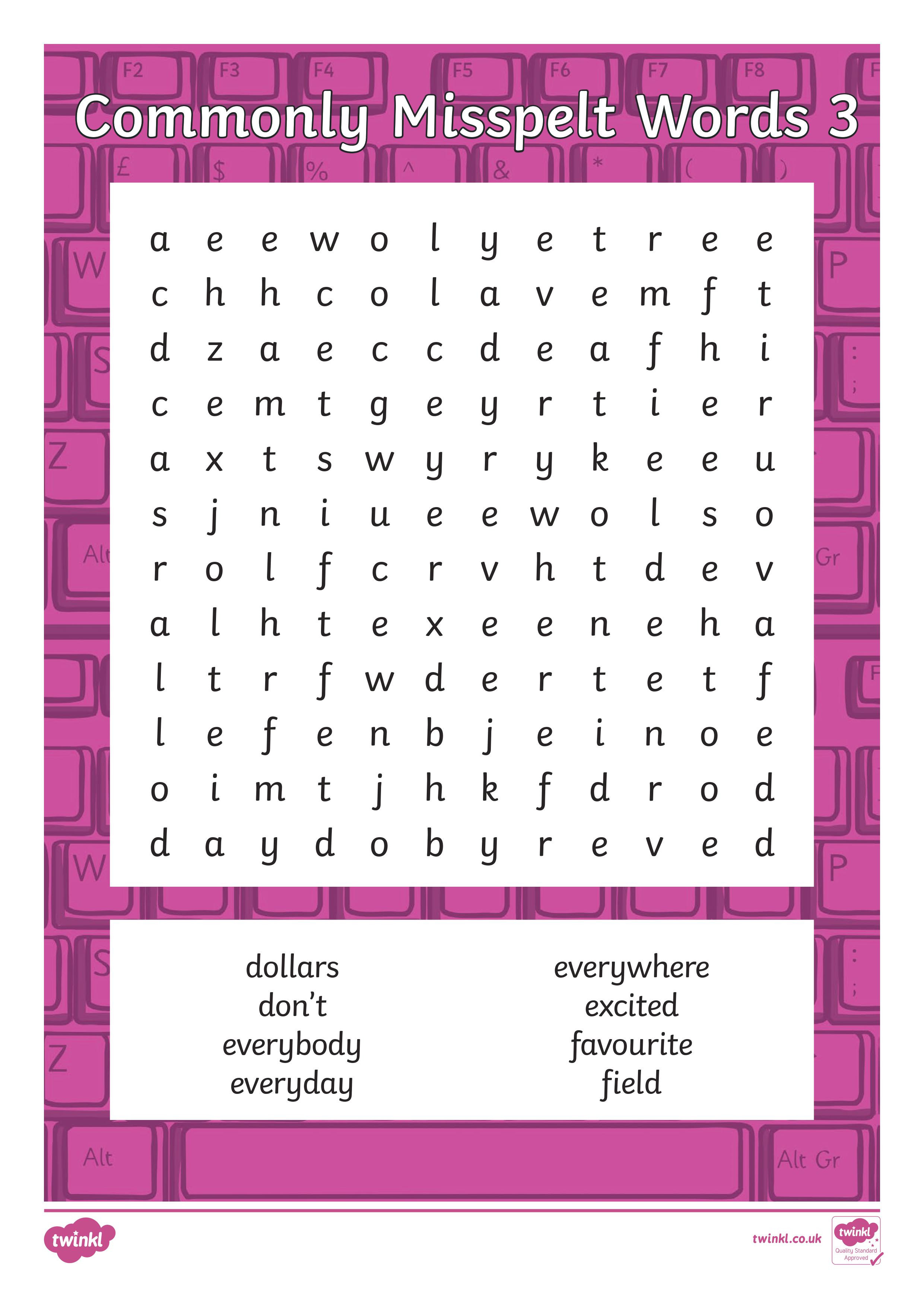


Please find attached a selection of word searches full of commonly misspelt words. Find the best word search for you and complete.
Challenge- can you now create your own word search of words that YOU find tricky to spell.
Grammar:
Please find attached Cameron’s conjunction challenge to complete. Remind yourself of what a conjunction is and underline all the conjunctions on the sheet.
Challenge- can you create your own sentences using a conjunction?
English:
Watch the video on the link below:
https://www.literacyshed.com/thewaybackhome.html
A young boy builds himself a rocket and sends himself off to Space. He lands on a far away planet. His spaceship breaks down, a friendly alien lands and he breaks down too. The little boy parachutes to earth to get some tools to fix the ship. He gets back by way of a huge ladder, fixes the machines and then they both fly off.
Choose one or more of the following writing opportunities:
- Write a diary/recount of the adventure in the video.
- Build a rocket and decide where it is going – write your own adventure story. Maybe you could film the story yourself.
- Write a holiday brochure page for their destination.
- Write dialogue between the boy and the alien.
- Write a description of the alien or the strange place in which they land.

Skills you’ve learnt in year 3 that you could use:
-Fronted adverbials.
-High level vocabulary (using a thesaurus to choose specific and relevant words)
– Descriptive language – expanded noun phrases, similes, metaphors, alliteration.
– Speech – correctly punctuated and a variety of words for ‘said’.
If you prefer to use the Oaks Academy lessons-
https://classroom.thenational.academy/lessons/story-reading-comprehension-predict-and-inference
https://classroom.thenational.academy/lessons/setting-description-reading-comprehension-word-meaning
https://classroom.thenational.academy/lessons/setting-description-write-a-setting-description-fc305c
Maths
Lots of you have been cooking and baking at home over these last few months so we think it’s really important to be able to accurately read scales and measure carefully.
https://classroom.thenational.academy/lessons/read-a-scale
https://classroom.thenational.academy/lessons/read-capacity-and-volume
https://classroom.thenational.academy/lessons/compare-capacity-and-volume
https://classroom.thenational.academy/lessons/ordering-capacity-and-volume
https://classroom.thenational.academy/lessons/add-and-subtract-capacity-and-volume
https://classroom.thenational.academy/lessons/solve-problems-involving-capacity-and-volume
Challenge-
Guided reading
GIRL ON A HOUSE ON A DRAGON
- What happened before this picture?
- How did the house get on top of the dragon? Who tied it onto the dragon’s back?
- Is the dragon happy about this?
- How do the girl and the dragon know one another?
- Why is the girl sitting on top of the house and not inside it?
- Is anyone else inside the house?
- Where did the kites come from?
- Where are the girl and the dragon going?
- Why are they travelling in this way?
- Give this picture a more interesting title.

Challenge: Compare this picture with the picture below titled ‘Best Friends’.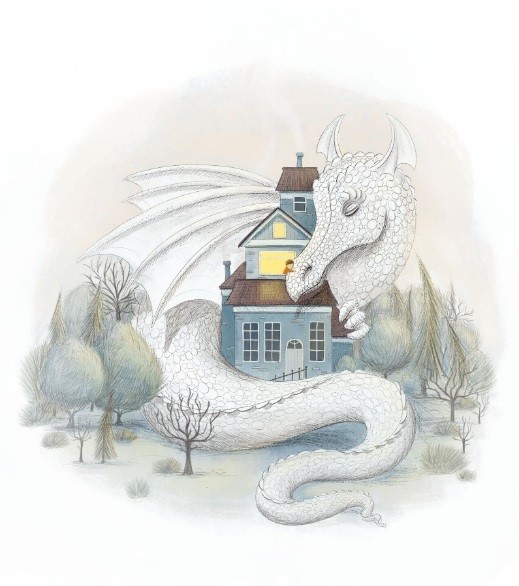
What’s similar and what’s different?
Which image do you prefer and why?
Does the dragon belong to the boy, or does the boy belong to the dragon?
Religious Education – Miss Honeywell
As we approach the end of the school year and consider our journey in faith towards God, now is a great time to reflect upon each of the Sacraments that form a special part of this journey. Please choose ONE of the seven Sacraments below: Baptism, Holy Communion, Confirmation, Marriage, Holy Orders, Reconciliation or Anointing of the Sick.

With your chosen sacrament, have a go at ONE of the following tasks…
- Write a prayer or poem about your favourite Sacrament. How could you ask for God’s blessing and guidance throughout your Christian journey? Describe how you would feel during the Sacrament.
- Create a stained glass window to represent the key symbol(s) of your chosen Sacrament. What do these symbols mean and why do you think that they are they important?
- Can you find any photographs at home from when you or a family member took part in any of the Sacraments? Discuss what the experience was like and what you can both still remember.
- Make a set of game cards to help you remember each of the sacraments (e.g. Snap, Pairs, Dobble) and how they are similar or different to one another.
- Are there any special garments or items of clothing that you would wear when taking part in your chosen Sacrament? Design an appropriate outfit – which colours or details would be suitable?
- Research how your chosen Sacrament is celebrated across different churches and countries. How do the celebrations compare to each other? Is there anything that surprised you?
Music from Mrs Sumba
Think back over the past school year which started in September 2019. What can you remember doing? Make a list of these things.
Now think of a tune you know well.
Using this tune and the list you have written, can you compose a song about this school year? Perhaps you could record yourself singing it.
Science from Miss Stapley
Spaghetti Towers https://www.rigb.org/families/experimental/spaghetti-towers – to watch the video
The activity:
- Make a tower from spaghetti and marshmallows.
- Experiment with the construction of your tower to find out which shapes are best for building with.
- Learn why some shapes are more stable than others when you build a tower. https://www.rigb.org/docs/spaghettitowers_infosheet_0_1.pdf – for the full information on the activity and questions to ask your child(ren)
You will need:
Packet of spaghetti (uncooked) • Packet of marshmallows
What to do:
Challenge a child or children to use marshmallows (whole ones or pieces) to join lengths of spaghetti together to make the tallest tower possible. You could start by building a simple cube and seeing what you need to do to make a taller structure that remains standing.
Going Further challenge:
- Instead of building a tall tower, you could try to build the strongest bridge from spaghetti and marshmallows.
- You could limit the amount of spaghetti and number of marshmallows to make the task more difficult.
- You could give children a budget with which to ‘buy’ spaghetti and marshmallows and make the ‘cost’ of the tower another element they have to consider.
- Try out this interactive ‘shapes’ lab to see how forces affect different shapes: http://bit.ly/ShapesLab
Have fun!
Friday 3rd July 2020
Happy Friday everyone, we hope you’re all well. It has been so, so wonderful to see so many of your lovely faces this week. We can’t believe how much we’ve laughed and how much you’ve grown! We are so proud of you all and the soon-to-be Year 4s that you’ve become.
We can’t quite believe it but here is your penultimate Home Learning blog before the summer…
WELL BEING: Mind Yeti. Google Mind yeti and follow the videos.
 It’s been a hot week and you’ve had a busy few weeks with all your fantastic home learning. Take some time for you. You can do this alone or with members of your family – even with your friends over face-time or zoom.
The mind yeti videos are all about mindfulness. Many of you may have lots of things going round in your heads, maybe lots of thoughts about school next year and how it will be, who your new teacher will be etc. Maybe things are starting to change again at home with parents returning to work. Maybe you are struggling to get to sleep at night because of the heat – watch the videos and try and do at least 10 minutes of Mind Yeti every day.
Topic: Chinese cuisine.
Have you ever eaten Chinese food? What’s your favourite?
Research Chinese cuisine (there is a PowerPoint to help you). Record any interesting information you find and then complete the activity below.
Fancy making Chinese food at home? Here’s a link to 10 family friendly recipes to try:
https://www.thespruceeats.com/chinese-food-recipes-for-kids-2097961
SPAG: Spelling- Your turn to be the teacher!
The following sentences have spelling errors. They will be found in spellings words we have covered this year. Can you proof read the sentence and correct the mistakes? Be careful as there may be more than one in each sentence.
1, The little girl skiped to school.
- The Cheshire cat smild at Alice with a wide grinn.
- I was unhapy when my football team lost there match.
- Their was just about enogh money in my purse to by the magazine.
- My freind doe’snt have a dog.
- The breaks on my bike weren’t working so I crashd into the pond.
- I wanted to where my spoty dress to the party.
- My sister was worryd that shed be late for school.
- My teacher thort I was being naughty but I was trying to be helpfull.
- Carlessly, I through away my train ticket.
Grammar:
- ROOT WORDS AND WORD FAMILIES.
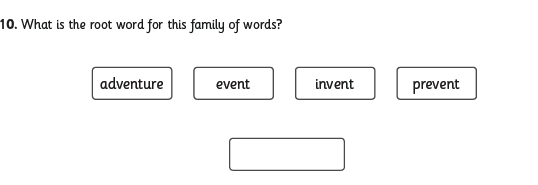
Challenge: What does the root word mean? Can you think of other words that have it as a root word?

Challenge: Take the word believe as your root word. How many other words are in this family? E.g. believable, belief.
- VOWELS AND CONSONANTS:
What is a consonant? What is a vowel? Can you list them?

English:
Activity 1: Start or finish your dragon newspaper report from last week’s home learning. As said last week, this should have taken you quite a white as it is important to spend some quality time following the steps that we do in school when writing so that you produce the best piece of writing you can.
- Plan your writing
- Write your first draft
- Spend some time editing and improving – monkey ears, read it through with an adult, use a thesaurus to improve word choices, check all your sentences don’t start the same, check spelling and punctuation.
- Then publish – be proud of your hard work. There are many blank templates on line to help you present your work correctly. Here is a link to help https://www.twinkl.co.uk/resources/planning-writing-writing-composition-english-key-stage-1/writing-frames-and-templates/newspaper-templates
WHEN WRITING:
First, create a name for your newspaper and a headline for the article.
After that, write your newspaper article – remember to include:
- Who, where, when and what, how! Go back to your research to find this information.
- How people reacted and felt – this is a good time to use your speech.
- What is going to happen next (be creative)
- Conclude with somewhere that people can go / call / email for help, to give more information, for support.
SUPPORT: Use the example template for a similar news article that you can use a model to support you.
Challenge:
Vary your sentence structure: Can you use a fronted adverbial to show (e.g. Still shaking in fear, Mrs. Pike stated she was just so grateful that the children weren’t in school at the time of the attack.) Word mat provided to remind you of the options. https://content.twinkl.co.uk/resource/f5/c4/t-l-4647–fronted-adverbials-ks2-word-mat-list-_ver_6.pdf?__token__=exp=1592815621~acl=%2Fresource%2Ff5%2Fc4%2Ft-l-4647–fronted-adverbials-ks2-word-mat-list-_ver_6.pdf%2A~hmac=60e431cd62337003b83721978d6b06603200626e08fd5407893a343bd8ff2054
Can you use a subordinate clause (Mrs. Atkins, a year 3 class teacher, was shocked by the damage caused.)
Activity 2: POETRY
Look at the following Bitezize videos about different types of poetry.
https://www.bbc.co.uk/bitesize/topics/z4mmn39
Choose a style of poetry and write your own poem about dragons (you can write more than one in a different style if you’d like to.)
Use the following to help:
– the dragon poems from guided reading last week
– the dragon word mats from your previous home learning.
– the new dragon vocabulary sheet linked to this weeks guided reading.
REMEMBER: Use high level, creative vocabulary.
Challenges: You don’t have to do all of these but they are features of poetry to consider when planning and writing your own.
Can you make it rhyme? (But it still make sense)
Can you use alliteration?
Can you use similes and metaphors? (As, as or like – remember the song? https://www.youtube.com/watch?v=Hwq5ptwr_-4)
Can you use onomatopoeia?
If you’d prefer more guidance to create your own poems, follow this sequence of Oak Academy lessons…
https://classroom.thenational.academy/lessons/poetry-write-a-sound-poem
https://classroom.thenational.academy/lessons/read-the-example-and-identify-the-key-features-12d697
https://classroom.thenational.academy/lessons/key-feature-spag-focus-1d3400
Guided reading
Use the picture – discuss and record your responses in any way you wish. There is no right or wrong – use inference and your imagination.
- What can you see? What do you think is happening/has happened/will happen? What do you wonder? Complete the See, think wonder resource sheet.
- Who owns this boat? Where is it from? Where is it going? Who travels on this boat?
- What can you see beneath the surface of the water?
- What is the creature called? Describe the creature. Consider its eyes, mouth, legs, tail and other details.
- What is the creature doing?
- Why does it have the anchor chain in its mouth?
- Has the creature been asked to pull the boat in this way? Is it under control or out of control?
- Where is it taking the boat?
- Why is it acting in this way?
- Why are the fish swimming alongside the creature?
- Who is in the hot air balloons?
CHALLENGE
Write a 100-word story about this picture. Try to include some of the words on the dragon vocabulary page.
Maths
Here are the next three Oak academy lessons to complete.
https://classroom.thenational.academy/lessons/to-describe-the-properties-of-3d-shapesMaths
https://classroom.thenational.academy/lessons/to-identify-and-describe-symmetry-in-2d-shapes
https://classroom.thenational.academy/lessons/to-revise-shapes
Challenge one-
Challenge two-
Challenge three-

Challenge four-

Science
Have a go at this End of Unit Assessment to see how much you’ve learned about Forces and Magnets. Ask a grown up or older sibling to mark it for you using the answers page. If there’s an area which you could improve upon, re-read the previous weeks lessons or do extra research on BBC Bitesize https://www.bbc.co.uk/bitesize/topics/zyttyrd
Art from Mrs Pearson:
Art Challenge For Father Jeremy:

Father Jeremy has got a very special celebration coming up on 26th July this year. He will be celebrating 45 years since his ordination into the priesthood. I think this is a remarkable achievement and should be marked by your incredible artwork. Therefore, your Art challenge for the next fortnight is to produce a piece of art for Father Jeremy. This can take any form you like from street art, a drawing, collage or even some edible art! As well as being a priest, Father Jeremy has a wide range of interests including walking, reading and nature. So let your creative juices flow and come up with something spectacular…. I know you will!
As I have mentioned, this is a two-week challenge and I would ask that, as well as me displaying your art on the Blog, would you please keep hold of it (yes even sculptures you may make), so that I can collect it from you, when we are all back in school and put it in a book and then present in to Father Jeremy.
As always, you can still send any other art work to me and I will post that on the Blog too.
Please email your artwork to me:
n.pearson@stpeterswaterlooville.hants.sch.uk
Thank you
Keep creating and keep safe!
Mrs Pearson
Music from Mrs Sumba
Over the past few weeks, you have listened to 10 pieces of music composed by Musical Trailblazers. Go to the website below and listen to them again.
https://www.bbc.co.uk/teach/ten-pieces/ten-pieces-trailblazers/zfpy7nb
Which was your favourite and why?
Which was your least favourite and why?
Science from Miss Stapley
If your child has an allergy to eggs – please choose another exciting investigation from https://www.rigb.org/families/experimental
Bouncing Eggs
https://www.rigb.org/families/experimental/eggsperiments – watch the video
- Make an uncooked egg bounce!
- ExpeRiment with different liquids to see what effect they have on eggs.
- Learn how the acid in household liquids like orange juice and vinegar react with eggshells and make them dissolve, leaving the inside of the egg intact.
https://www.rigb.org/docs/dissolving_eggs_infosheet_v2_0_1.pdf – download worksheet for instructions and questions to ask before and after the investigation.
You will need:
5 eggs • Glasses or jars that an egg can fit inside comfortably • Cling film • Oil • Milk • Water • Vinegar • Orange juice
Going further challenge:
- You can use the shell-less eggs you make from this experiment to do another activity which will let you shrink and expand the eggs by placing them in different liquids: http://bit.ly/nakedeggs
- Watch a video of how to make a coloured bouncy egg, then try making one yourself: http://bit.ly/RubberEgg
26th June 2020
Hello Happy Hippos and Lovely Lions,
We hope you are well! We are so looking forward to meeting up with you next week, we hope you are too.
Here is next weeks homelearning- enjoy!
Topic:
Here are some fun facts about Chinas terracotta army-
https://www.childrensmuseum.org/blog/10-amazing-facts-about-the-terra-cotta-warriors
Have a look at the PowerPoint information on the terracotta army too-
Using this information you could make-
- A quiz for your friends to answer about the army
- A PowerPoint of the information you have found out
- A story about the army using the facts you have learnt
- An information booklet
Maths
Here are the next two oak lessons on 2D shapes.
https://classroom.thenational.academy/lessons/to-describe-2-d-shapes-based-on-their-properties
https://classroom.thenational.academy/lessons/to-draw-2-d-shapes-based-on-their-properties
If you fancy a challenge…
Challenge 1-

Challenge 2-

Challenge 3-
https://nrich.maths.org/7192/note you can use shapes from home, draw your own shapes or print off the sheet if you can to solve this problem.
SPAG: Spelling-
We are going to recap the suffixes ‘s’ ‘es’ ‘ed’ ing’ ‘er’
Using the grid words how many different accurate words can you create using these suffixes? Remember some words will be used more than once.
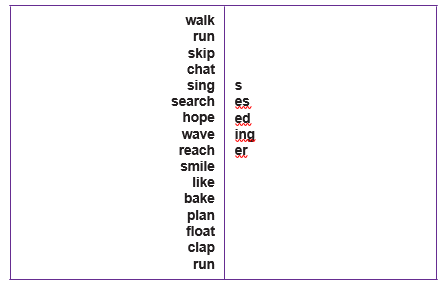
Challenge- can you use these words in a sentence?
Grammar:
What is a consonant? What is a vowel?
https://www.bbc.co.uk/bitesize/topics/zxfyjty/articles/zs2crdm


CHALLENGE: Write as many prepositions that you can think of then choose 5 to write into descriptive sentences?

CHALLENGE: Can you explain how you know which one is correct and which ones are incorrect?
English
Activity 1: Headline vocabulary:
A headline should be short, snappy and give the reader an idea about what the story is about. It should also make them want to read on.
They try to use words that grab the reader’s attention. Complete the vocabulary task.
Activity 2: Create your own headlines!
Carefully read these short newspaper stories and create an interesting headline for each, which will grab the reader’s attention. Using a thesaurus (online if you don’t own one) would be an excellent way to help with interesting vocabulary choices. CHALLENGE: Can you use alliteration?
- Three children were walking across a field in Waterlooville when they discovered a hole. At the bottom of the hole was a chest filled with gold and silver. The children ran and told the police about their discovery.
- Two days ago a kitten called Cookie, belonging to Mrs Edge, climbed a tree. It got stuck at the top and could not get down. A large crowd gathered. They could not help the cat. In the end they sent for the fire brigade. The firemen put a ladder up the tree and brought the frightened cat down.
- Late last night, three men disguised wearing wigs and sunglasses stole over £1000 worth of goodies from a sweet shop. They smashed their way through the front door around midnight and filled sacks with delicious treats. It is hoped that they will be found and arrested soon.
- Cunningham, a local headteacher, is celebrating his first prize win at a local gardening contest. His beautiful display of flowers beat many other contestants. Rumours have it that his own back garden looks better than the Queen’s! Photographs of his display can be seen on our website.
Activity 3: Now you’ve practiced lots of the features of an article, you are ready to report on the School dragon story. THIS WILL BE PART OF NEXT WEEK’S LEARNING TOO – it is important to spend some quality time following the steps that we do in school when writing so that you produce the best piece of writing you can.
- Plan your writing
- Write your first draft
- Spend some time editing and improving – monkey ears, read it through with an adult, use a thesaurus to improve word choices, check all your sentences don’t start the same, check spelling and punctuation.
- Then publish – be proud of your hard work. There are many blank templates on line to help you present your work correctly. Here is a link to help https://www.twinkl.co.uk/resources/planning-writing-writing-composition-english-key-stage-1/writing-frames-and-templates/newspaper-templates
WHEN WRITING:
First, create a name for your newspaper and a headline for the article.
After that, write your newspaper article – remember to include:
- Who, where, when and what, how! Go back to your research to find this information.
- How people reacted and felt – this is a good time to use your speech.
- What is going to happen next (be creative)
- Conclude with somewhere that people can go / call / email for help, to give more information, for support.
SUPPORT: Use the example template for a similar news article that you can use a model to support you.
Challenge: Vary your sentence structure: Can you use a fronted adverbial to show (e.g. Still shaking in fear, Mrs. Pike stated she was just so grateful that the children weren’t in school at the time of the attack.) Word mat provided to remind you of the options. https://content.twinkl.co.uk/resource/f5/c4/t-l-4647–fronted-adverbials-ks2-word-mat-list-_ver_6.pdf?__token__=exp=1592815621~acl=%2Fresource%2Ff5%2Fc4%2Ft-l-4647–fronted-adverbials-ks2-word-mat-list-_ver_6.pdf%2A~hmac=60e431cd62337003b83721978d6b06603200626e08fd5407893a343bd8ff2054
Can you use a subordinate clause (Mrs. Atkins, a year 3 class teacher, was shocked by the damage cause.)
Guided reading: Dragon poems.
Here are 4 short poems about dragons. Read them aloud, you could even perform them if you want to.
Poem 1: Ancient Dragons
Dragons, they say, lived long ago.
Where they came from, I do not know.
Some like to fly and roar and prance.
Others are colourful and love to dance.
Long tails,
Huge wings,
Golden eyes,
Sharp claws,
Scaly skin,
Forked tongue …
I’m glad they don’t live here any more.
Poem 2: Fly Dragon Fly
Fly, dragon, fly,
Higher and higher.
Breathe, dragon, breathe,
Flames of fire.
Blink, dragon, blink,
Your eyes of gold.
Sleep, dragon, sleep.
You are ever so old.
Poem 3: Friendly Dragons
Friendly dragons are fun,
Flying through the air.
If it wasn’t for their fiery breath
You’d hardly know they were there.
They like to make sandcastles,
And play football in the park,
And thanks to their fiery breath
You can find them in the dark!
Poem 4: My New Pet.
My new pet is a curious kind.
It popped out of an egg that I did find.
With beady eyes and curly claws
And razor sharp teeth filling its jaws.
Enormous wings like leathery sails,
Scaly armour right down to its tail,
Roaring and huffing and puffing out fire,
To eat you for dinner is all it desires.
It’s not a snake, or a lizard, or bat …
My pet is a DRAGON!
How about that?
Which one do you prefer and why?
Look at the styles, shape, rhyming patterns and rhythm when reading them. Make notes around the poems, draw pictures of what comes to mind (like a read aloud think aloud).
Hint: These might help you with your English next week.
Science
Have you noticed that when you play with magnets, they don’t need to be touching to have an effect on a magnetic object? Using magnetic force to act on objects from a distance happens all the time at scrapyards. Watch this video here https://www.bbc.co.uk/bitesize/clips/zcntsbk .

Can you draw and label a scientific diagram, showing either the rotating magnet or the plate magnet and its use at the scrapyard? Here is an example of a different experiment, drawn as a scientific diagram. Notice how the drawings are simple and the illustrator has used a ruler.
Challenge – Explain the effect that electricity had on the plate magnet.
Music from Mrs Sumba
Hans Zimmer
Go to the website below and watch Naomi Wilkinson’s video about Hans Zimmer
https://www.bbc.co.uk/teach/ten-pieces/classical-music-hans-zimmer-earth/zh4k382
Why is Hans Zimmer considered a musical trail blazer?
Now listen to the whole piece in the second video.
Zimmer tells us to,
‘Do what you wanna do with it!’
How can you ‘play and get creative’ with this piece?
Science from Miss Stapley
Giant Bubbles https://www.rigb.org/families/experimental/giant-bubbles – watch the video
- Make a home-bubble mixture and wands. Use them to look more closely at the characteristics and behaviour of soap bubbles.
- Experiment with different shapes and sizes of bubbles and see what you can and cannot control about bubbles. Learn how to make giant bubbles and find out why bubbles are usually round.
- Learn how to make giant bubbles and find out why bubbles are usually round. https://www.rigb.org/docs/giantbubbles_infosheet_0_0.pdf – details on the information sheet.
You will need:
- Good quality washing up liquid
- Water
- Glycerin (optional)
- Plastic tub or other container for bubble mixture
- Measuring jug (optional)
- Various things with holes in them for blowing bubbles with. Watch the video for ideas. Straws, pipe cleaners, paperclips, coat hangers, cookie cutters and cake tins with removable bottoms are all particularly good.
- For giant bubbles: wooden spoons (or other sticks), a couple of metres of string and a small weight you can thread through it, like a metal key ring or nut.
What to do:
A mixture we found that works is 1 litre of water, 100ml of washing up liquid and 30 ml (2 tablespoons) of glycerin. Blow some bubbles!
Put a straw into your bubble solution and try blowing gently into the liquid. You should be able to make a lot of bubbles very quickly. Then dip one end of a straw into the solution, take it out and blow gently through the other end. See if you can control the size of bubble you can blow out of the straw.
Try making bubbles using things with bigger holes, like a paperclip or pipe cleaner bent into a circle. Try poking a dry finger into a bubble, then try the same thing after dipping your finger in bubble solution.
Try making bubbles inside bubbles by poking a straw dipped in bubble solution into an existing bubble and blowing again.
Try out objects with different shaped holes, like cookie cutters or pipe cleaners bent into other shapes. Try objects with really big holes, like a coat hanger or a cake baking tin with its bottom removed. Try making giant bubbles with the special wand we show you how to make in the video.
Going Further:
- You can experiment with your bubble mixture and giant bubble wand to see just how big you can get your bubbles to be. There are lots of different bubble mixture recipes on the internet, just search for “soap bubble recipe”.
- You could try making two or three of them and comparing how good the bubbles they make are.
Re from Miss Honeywell
Our school patronal feast day takes place on Sunday 28th June. In order to prepare for this special time of the year, please choose ONE of the following activities in order to learn more about St. Peter…
- Write a diary entry as St. Peter, when he escaped from prison. Describe how he felt when the Lord sent an angel to free him from the jail that Herod had cruelly locked him up in. How did they get out of the prison?
- Jesus told Peter, ‘I will give you the keys to the Kingdom of Heaven’. Design the keys and include as many symbols as you can to represent St. Peter and why he was so special. What would the keys be made of?
- Jesus said to Peter, ‘You are a rock, and on this rock I will build my church’. Could you paint or decorate a stone or pebble, to show ways in which to build God’s church? (e.g. by spreading love, faith and Good News).
- Create a selection of short prayers to ask for God’s guidance during the global pandemic. How could we demonstrate the courage, faith and commitment that was demonstrated by St. Peter, as we work to support others?
- Take a look at the St. Peter’s logo on our school website. Can you re-design the crest so it reflects the qualities of St. Peter? (e.g. trust, hope, responsibility). Why did Jesus say ‘feed my lambs’? How might St. Peter ask us to continue God’s work on earth?
- Use the internet to research St. Peter – can you make a fact file about our school saint? Which key words might you use as part of your factual information page? Were there any articles about St. Peter that particularly interested or surprised you?
Art from Mrs Pearson:
Art Challenge: The Great Getaway! TRANSPORT
The title for your art this week is The Great Getaway! TRANSPORT. This can take the form of a drawing, a painting, a sculpture, a collage or anything else that you would like to create. As always, I’m sure you will impress me with your creativity! Here are some ideas:


CHALLENGE: Design your own vehicle, maybe one that flies and can float on water!
However, if this doesn’t appeal to you then you can still send any other art work to me and I will post that on the Blog too. Please email your artwork to me:
n.pearson@stpeterswaterlooville.hants.sch.uk
Thank you
Keep creating and keep safe!
Mrs Pearson
Have another lovely week Year Three!
Art homelearning
Art Challenge Feast Days
We have two important Feast Days in our Church calendar for June. The 19th June is the Feast of the Sacred Heart and 29th June is the Feast Day of St Peter and St Paul.
For your art challenge this week I would you to do a creation linked to either of these Feast Days.
The Sacred Heart of Jesus is an object of devotion and always falls 19 days after Pentecost.
As you know, St Peter was given the ‘keys to heaven’ by Jesus and was our first Pope and in Matthew Ch16v18 Jesus said ‘And I tell you, you are Peter, and on this rock I will build my church.’ He is also the Patron St of fishermen. St Paul changed from not believing in Christianity to spreading the word through the letters that he wrote. Naturally, he is the Patron St of writers.
Ideas to inspire you:


Alternatively, you could do artwork to do with the Patron St that you have been linked to in school (England St George; Scotland St Andrew; Ireland St Patrick: Wales St David), or the Patron St of your home country.
However, if this doesn’t appeal to you, then you can still send any other art work to me and I will post that on the Blog too.
Please email your artwork to me:
n.pearson@stpeterswaterlooville.hants.sch.uk
19th June 2020
Hello Happy Hippos and Lovely Lions,
We hope you are loving all of the work we have set for you- who knew there were dragons around!
Here is our learning for this week…
Topic:
China is well known for origami, a skill taught in which paper is folded to make art work. Below is a link to make your very own origami fox!
https://www.easypeasyandfun.com/origami-fox/
Can you challenge yourself and make any other animals?
English: Direct speech
Activity 1: Revision.
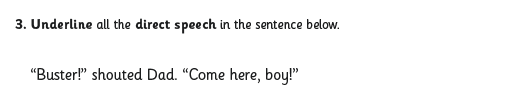
What can you remember about how to punctuate speech? Remember: Speech is what someone is saying. The attachment gives you lots of different activities around speech to help you revise how to correctly punctuate sentences where someone is speaking. Think hard about all the work we’ve already done in class but there’s also a handy parents guide for a grown up to help you if you get stuck.
Activity 2:
In newspapers, reporters often use direct speech in their stories.
When interviewed about the Dragon incident at school. The following staff members had the following to say:
Mrs Pike: I couldn’t believe what I saw. The classroom was a total mess and all the children’s work was destroyed. I’m so grateful we weren’t in class at the time.
Mr Cunningham: It’s a nightmare. There is a huge amount of damage which will cost so much money to repair.
Miss Shaw: The dragon was enormous. Smoke billowed from its nostrils and the screech that came from it was deafening. I was terrified.
Mr Chapman: Tiles were falling off the roof and parts of the classroom were still smouldering. I had to work quickly to make sure the site was safe before anyone got seriously hurt.
Rewrite these sentences using the correct speech punctuation – this will be for a newspaper so you need to add as much information for the reader as possible.
Remember:
-Use inverted commas around the words that person is saying.
-Who is speaking? How are they speaking? You are not allowed to use the word ‘said’. Can you add an adverb or further information to improve the sentence?
– You can split the speech in 2 sections.
– Can you improve the rest of the punctuation?
Challenge: Can you add a subordinate clause to give extra information?
There are many different ways to write speech sentences. Have a go at different ways to see what you prefer and what you think sounds best.
Here are some examples:
“I couldn’t believe what I saw! The classroom was a total mess and all the children’s work was destroyed. I’m so grateful we weren’t in class at the time!” exclaimed Mrs Pike despondently.
Mrs Pike, one of the year 3 teachers at St Peter’s Primary school, exclaimed “ I couldn’t believe what I saw! The classroom was a total mess and all the children’s work was destroyed. I’m so grateful we weren’t in class at the time!”
“I couldn’t believe what I saw!” exclaimed Mrs Pike as she struggled to fight back tears, “the classroom was a total mess and all the children’s work was destroyed. I’m so grateful we weren’t in class at the time.
Challenge: If you’d like to challenge yourself, please take a look at this PDF. It tells you all about direct speech and reported speech. See if you can rewrite any of your sentences from your work as reported speech instead.
Guided reading:
- Complete the comprehension task below. There are 3 levels so ensure you challenge yourself – ask a grown up to help you decide if you’re not sure.
2. Take some time to read a selection of newspapers and articles. Think about the way they are written, what they trying to tell you, how the journalist makes it interesting for the reader. The Newsround website is a great place to start. First News (the paper we have in school) is also offering free downloads of digital copies, available via their website with an email address.
Maths
Here are the next two Oaks Academy lessons to complete- here is a revision lesson on parallel and perpendicular lines from last week.
https://classroom.thenational.academy/lessons/to-revise-parallel-and-perpendicular-lines
Here is a lesson starting our new learning on 2d shapes-
https://classroom.thenational.academy/lessons/to-identify-rectangles-including-squares
If you fancy a challenge try these –
SPAG- spelling
| young | double | touch |
| trouble | country | rough |
This week we are focusing on the /u/ sound spelt ‘ou’. Look at the words above. ‘box up’ these words, for example-
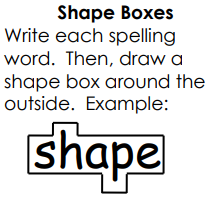
Challenge- can you now create a word search hiding these words?
Grammar:
- When do we add ‘a’ or ‘an’ before words? Write the rule down.
Challenge: Can you think of any exceptions?
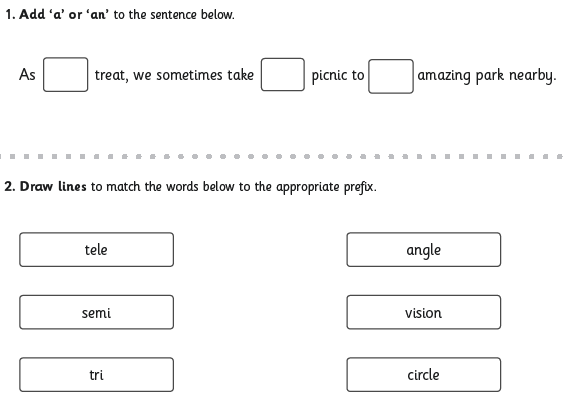
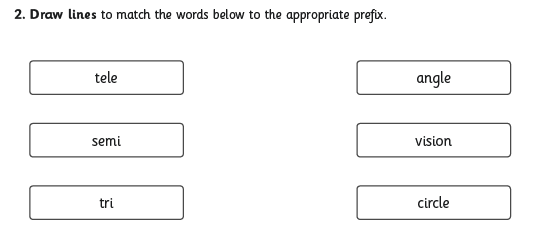
- What is a prefix? Complete the following activity.
Challenge: Can you find the meaning of each prefix? Can you think of any other examples – create a word web for each prefix.
- Use your English work to complete.
- Remember that an adverb adds to the verb.

Science
Have a watch of the following video https://www.bbc.co.uk/bitesize/clips/zk9rkqt . Feel free to explore other videos in the Magnets collection in addition to this one if you’re interested. If you have them, have a play with some magnets to see if you can get them to attract/repel each other. Or you could use toy trains like these.
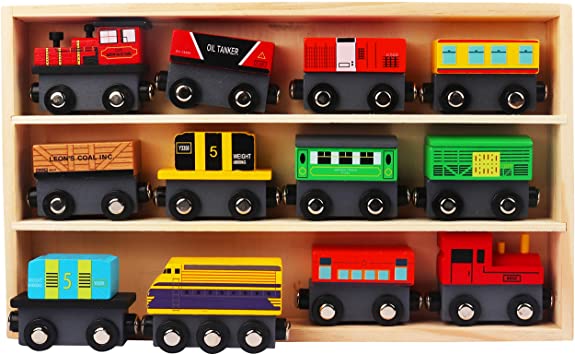
Here’s an Activity Sheet to complete.
This website has a very good explanation and an interesting experiment to try too… https://nationalmaglab.org/education/magnet-academy/try-at-home/make-a-compass
Music from Mrs Sumba
Go to the website below and watch Naomi Wilkinson’s video about Grazyna Bacewicz.
https://www.bbc.co.uk/teach/ten-pieces/classical-music-grazyna-bacewicz-overture/zf2k382
Why was Grazyna Bacewicz considered a musical trail blazer?
Now listen to the whole piece in the second video. Can you hear the morse code pattern v …- for victory?
Why not try creating your own secretive rhythms
- This is top secret.
2. Don’t tell a soul.
Science from Miss Stapley
Balloon Car Racers https://www.rigb.org/families/experimental/balloon-car-racers – to watch the video
The activity – Make cars which are propelled by balloon power.
ExpeRiment with designs and see what factors affect how fast or how far your car goes.
Learn how a balloon car works just like a rocket.
https://www.rigb.org/docs/ballooncarracers_infosheet_1_1.pdf – to view the information sheet
What to do:
- Make a balloon car based on the instructions Mark gives in the video.
- Decide how you will judge what makes a ‘good’ car – is it how far it goes or how fast it goes?
- Investigate what happens if you have bigger or smaller wheels (you can use other types of lids or make wheels from cardboard and use blu-tac or glue to attach them to the kebab skewers).
- Investigate what happens if you change the design of your car in other ways – you can watch the video again for inspiration for other designs.
Going further challenge:
- Measure how far your car travels using a tape measure.
- Time how fast your car travels ½ a metre – would double the speed be the time that your car would travel 1 metre? Test it out.
- You can find the speed of your car in metres per second using a stopclock and a tape measure: Measure the distance the car travels (in metres) then dividing that distance by the time it took to travel (in seconds).
History Learning: Windrush
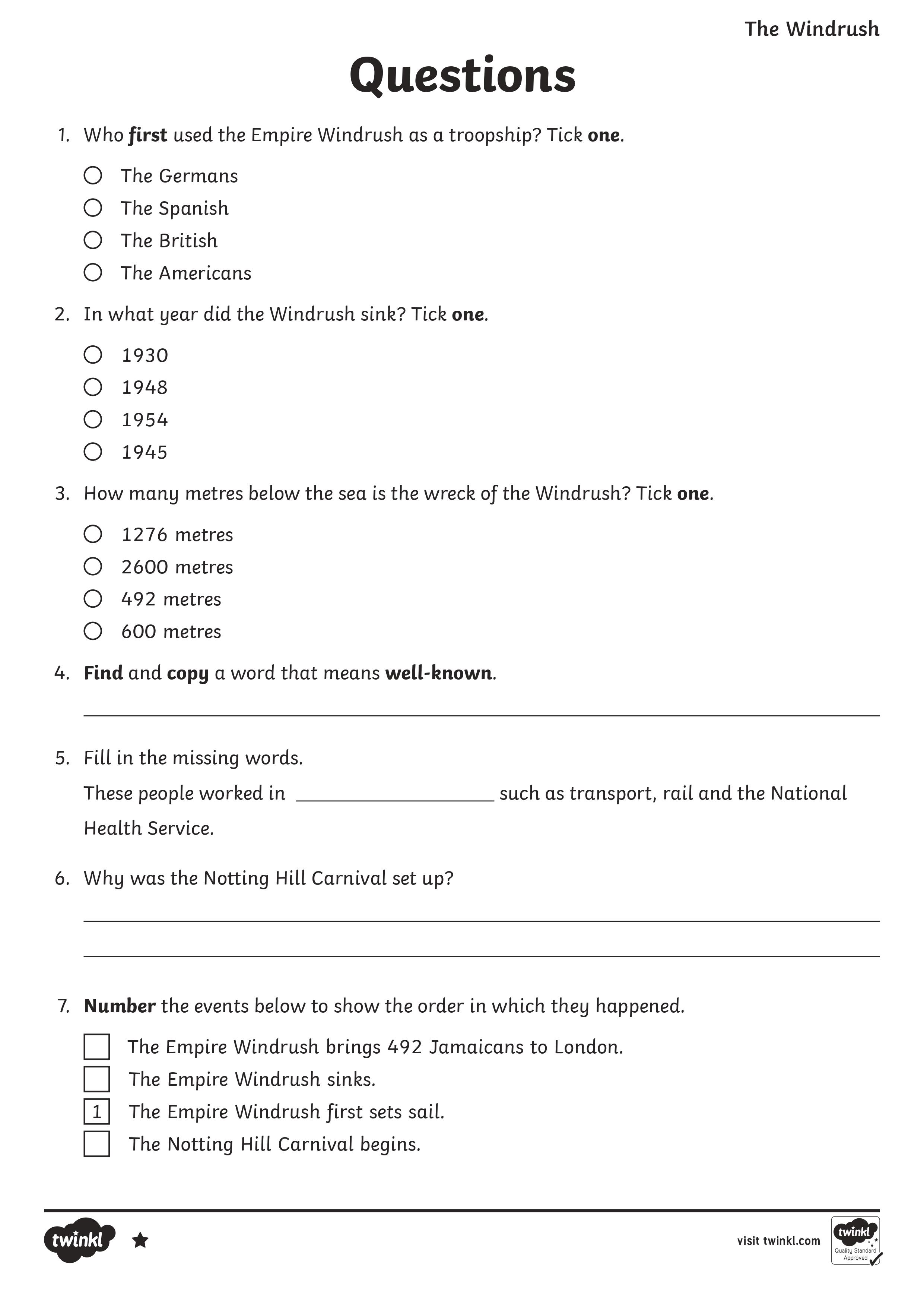
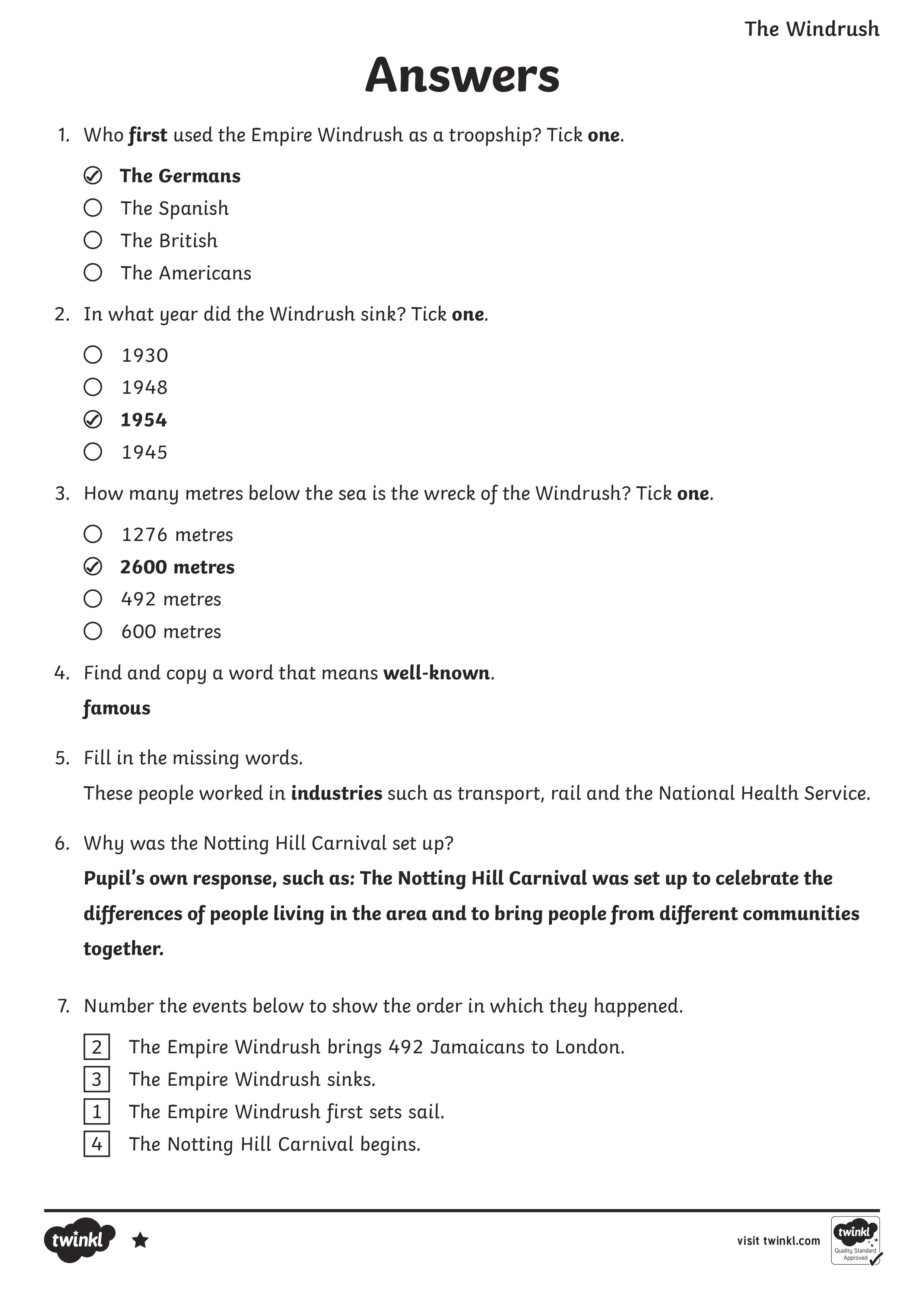
June 22nd marks the anniversary of the arrival of the ‘Windrush Generation’ to Britain in 1948. Learn about the event by reading this comprehension text and then complete the Geography activity afterwards.


Friday 12th June
Hello Year Three, we hope you are all well?
We won’t be posting any more baking photos or photos of Odi the dog, as we are all back in school teaching full time! Mrs Atkins and Miss Shaw are teaching pods of 15 in year R and Mrs Pike is teaching a key worker children pod. But we are enjoying hearing about all of your adventures on our phonecalls.
Here is your home learning for this week, we hope you are enjoying your new topic China-
Topic: The Great Wall of China.
- Take a virtual walk along the Great Wall of China.
https://www.youtube.com/watch?v=Ly32xBm7CE8
- Can you create poster about The Great Wall of China? You can include any information but these questions may be a helpful starting point and there’s a website that may be useful too.
- Who built it and when?
- Why was it built?
- The size of the wall – height and length?
https://www.activityvillage.co.uk/the-great-wall-of-china
- Great Wall of China lego activity.
English: BREAKING NEWS! A DRAGON HAS BEEN SPOTTED OVER WATERLOOVILLE AND IT’S DAMAGED OUR SCHOOL!

Can you help us? Specialist believes it may be a similar species of dragon to the one that has been spotted recently in The USA. Watch the video clips to see for yourselves!
https://www.youtube.com/watch?v=ae1nMWcllQM
https://www.youtube.com/watch?v=bOksN4FG18o
https://www.youtube.com/watch?v=_u0eKEYNqhM
Part 1:
Discuss what you think might have happened at our school. Use the hand template to think of key questions you would need to investigate in order to be able to report on this strange event? Why don’t you draw round your own hand to present your work?

Part 2:
The staff attended a meeting in school this week to find out some more information – we have made some notes for you. Can these help with your investigation? Do the notes answer any of your key questions? What other information about the dragon and the event can you deduce from our notes.
Guided reading: Newspapers
Activity 1: Match the feature of a newspaper to the purpose. You can cut and stick using the attached activity or use this as a guide to present your work how you wish. Can you label a newspaper or find examples of each feature?
Guided reading features of a newspaper
Activity 2: One of the features was ‘facts’. What is the difference between a fact and an opinion? Discuss with people at home / research and record your findings.
Activity 3: Complete the fact or opinion activity. Fact or opinion task 3
Maths
Here are the next two oaks academy lessons to complete-
https://classroom.thenational.academy/lessons/to-draw-perpendicular-lines
https://classroom.thenational.academy/lessons/to-identify-and-explain-parallel-lines
If you fancy a challenge…
Spelling
Below is a table of all the different graphemes for the long vowel /ee/. Can you add different words containing this phoneme to the correct column?

Science
It’s time for another hunt around your house! This time we want you to take a magnet with you – just an ordinary fridge magnet will do. Make a list of objects which are magnetic (attracted by the magnet) and are not magnetic (are not attracted by the magnet) and put them into a table like this…
| Magnetic | Not Magnetic |
|
|
Look for patterns or clues in your observations. What do the magnetic items have in common? As an extra challenge, research what makes something magnetic to see if your observations are correct.
Music from Mrs Sumba
Antonio Vivaldi
Go to the website below and watch Stephanie Childress’ video about Antonio Vivaldi.
Why was Antonio considered a musical trailblazer?
Now close your eyes and listen to the whole piece on the 2nd video.
What pictures come into your head?
Find a creative way to respond to the music. This could be by dancing, drawing, painting or writing a poem. You may have your own idea.
Challenge
Why not listen to another piece from Vivaldi’s Four Seasons- Spring, Autumn or Summer?
Science from Miss Stapley
**Please note that this activity must be carried out in the presence of an adult to ensure safety**
Safety advice for parents
- Do the activity on a table which is cleared of any other flammable objects or materials. Use your judgement as a parent to decide whether or not to let your child light the candles on their own.
- Make sure you’ve blown out any candles after doing the activity. Don’t move a lit candle when doing this activity. Don’t allow your child to touch the wick or candle until it has completely cooled.
- Don’t leave a lit candle unattended at any time. There’s more extensive safety advice on using candles from the UK Fire Service here: http://bit.ly/BeFireSafe
The activity
- Make a blown out candle relight as if by magic.
- Experiment to find out how long a candle will burn in different amounts of air.
- Learn about the chemistry of how a candle burns. https://www.rigb.org/families/experimental/candle-chemistry
What you will need
- At least one tea light or other small candle.
- Gas-powered cooker lighter (or long handled matches).
- Glass jars or glasses of various sizes.
- Stopwatch (maybe the one on your smartphone) or other way of measuring time.
What to do https://www.rigb.org/docs/candlechemistry_infosheet_0_1.pdf – for information sheet about the activity.
Going Further Challenge: Learn more facts about fire: http://bit.ly/FireFacts Make a carbon dioxide fire extinguisher for your candles: http://bit.ly/CO2Ext Watch a video on how candles are made: http://bit.ly/CandlesMade Use a candle to suck water into a glass like Josh does at the end of the film: http://bit.ly/WaterCandle
RE learning from Miss Honeywell
Following the celebration of Pentecost in our Church calendar, we would like you continue to reflect upon our Mission and how we can ‘use the gifts God gave us to make our world a better place’.
Just as the Holy Spirit had appeared to the Apostles of Jesus and gave them hope while they were in Jerusalem, we would like you to consider how YOU can use the power of the Holy Spirit to support and encourage others.
Can you complete ONE of the following activities, to explore how we can continue God’s work on Earth as His followers?
– Design a logo for a charity that you feel could be made in order to support others. You can be as creative as you like! Can you include symbols of the Holy Spirit?
– Research one of the following organisations: CAFOD, Christian Aid, Missio. What is special about this charity? How do they put the needs of others first?
– Create a new school Mission Statement for St. Peters – what else can we do to help others in our community and the wider world? Which actions do you feel would be most important?
– Paint a picture of Oscar Romero. How did he follow the values set out by our school Mission Statement? Can you include key facts about his work?
– Write a letter to your local priest. Could you suggest any ways in which you could support the Church in raising money for good causes, in the future? E.g. by helping in a bake sale or coffee morning, once it is safe to do so.
Art Challenge from Mrs Pearson
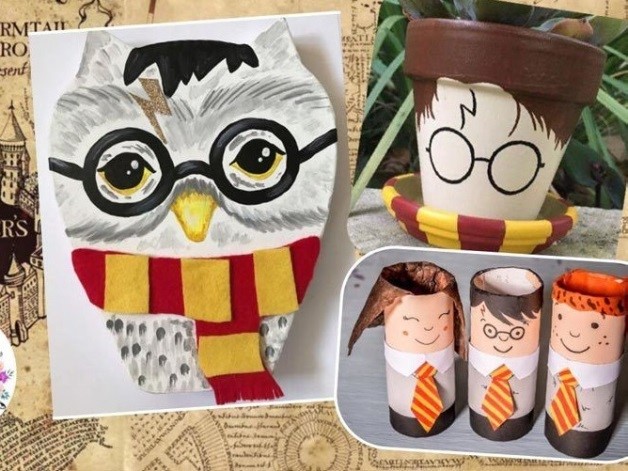
Key Stage Two for your art challenge this week I would like you to do a piece of Artwork linked to a poem or book. This could be a collage picture from Owl and the Pussycat, or a STREETART word from a war poem. You may even design a new front cover for your favourite book. Let your fantastic imaginations go wild! WOW! CHALLENGE: Read the poem or part of the book aloud to your family, using expression.
Ideas to inspire you:


However, if this doesn’t appeal to you, then you can still send any other art work to me and I will post that on the Blog too.
Please email your artwork to me:
n.pearson@stpeterswaterlooville.hants.sch.uk
Thank you
Keep creating and keep safe!
Mrs Pearson
Have a lovely week and stay safe Happy Hippos and Lovely Lions!
Friday 5th June 2020
Hello everyone! Just to reiterate – it is not a requirement to complete all of the tasks listed. We have said that you should complete the Guided Reading, English and Maths activities over the week and work on anything else in addition if you wish/can. Please don’t feel that by saying this we are devaluing home learning or that it is not important. It is crucial to set time aside some to do school work. Again, don’t feel restricted by these activities either; if your child is motivated to do other reading, writing or Maths that is better centered on their interests, feel free to do these instead.
Here is this week’s home learning…
Topic:
Find the year you were born, what Chinese animal are you? How about members of your family? Can you research what this means?
According to Chinese legends, what traits do people born in these years have? Does this sound like you? Record your thoughts as creatively as you’d like.
Feeling creative? Make your own Chinese dragon using the link below.
https://www.twinkl.co.uk/resource/t-t-9072-chinese-new-year-paper-craft-dragon
English:
Use the image below and the word mat to write a description of the dragon. Try to include powerful adjectives, similes and fronted adverbials (to show where, why or how).

For example: Glaring red eyes stared down and its wide cavernous nostrils flared. His huge hulk of a scaly green body slowly moved up and down with each furious breath. Without warning colossal explosions of flames erupted from its mouth, shooting wildly in all directions, like a ferocious, erupting volcano.
Guided reading:
Read the following Chinese fairy tale wither on your own or with a grown up. Talk about the story and make sure you understand it. Here are some comprehension questions for you to discuss and respond to:
1, What are the four Dragons that lived in the Eastern Sea?
2. What did the four Dragons see while they were playing hide-and-seek in the cloud?
3. Based on the fairy tale, who can give rain to the people on earth?
4. How did Jade Emperor respond to the Dragons request?
5. What happened the next day? Did it rain?
6. What was the Long Dragon’s idea about making rain?
7. What did Jade Emperor do when he learned that the Four Dragons made rain without his permission?
8. What did the Four Dragons become in the end?
CHALLENGE: Think about fairy tales that you know (Little Red Riding Hood, Goldilocks and the three bears, Hansel and Gretel etc) How is that fairy tale similar or different to the Chinese fairy tale?
https://www.worldoftales.com/Asian_folktales/Asian_Folktale_6.html
Spelling
Below is a range of homophones. Can you use a dictionary or the internet to find the different definitions for each of these words?

Can you now write/ draw these homophones in a way that will help you remember? For example-

Maths
Below is a lesson to help you revise your angle work from the last couple of weeks.
https://www.thenational.academy/year-3/maths/to-revise-angles-year-3-wk4-5
Can you remember when we learnt about perpendicular lines? Here is a reminder:
https://www.thenational.academy/year-3/maths/to-identify-perpendicular-lines-year-3-wk5-1
Science
Hopefully from the BBC Bitesize videos from last week’s home learning, you found out that forces are pushes and pulls which act on objects. This week we are going to be investigating one of the forces in closer detail. Friction is a force which resists movement between two objects. It slows things down and tries to stop them moving.
Our investigation compares how things move on different surfaces. Follow the instructions here…#
We recommend trying out surfaces such as sandpaper, a towel, tin foil, lino, carpet and bubblewrap or corrugated cardboard and using the 2-star Recording Sheet, found here:
Music from Mrs Sumba
Go to the website below and watch Naomi Wilkinson’s video about Heitor Villa Lobos.
https://www.bbc.co.uk/teach/ten-pieces/classical-music-heitor-villa-lobos/z4nsmfr
Why was Heitor Villa Lobos considered a musical trailblazer?
Now listen to the whole piece on the 2nd video.
Choose your own form of transport. What is the main rhythm it makes? (For example what rhythm might the pedals on a bike or the oars on a rowing boat make?
How could you play this rhythm? (Perhaps you could recreate the rhythm of the oars by splashing your hand in a bowl of water.)
What other sounds does your transport make? How can you add these? Could other members of your family join in so you can layer the sounds?
Science from Miss Stapley
Homemade Lava Lamp
https://www.rigb.org/families/experimental/homemade-lava-lamp
Experiment with objects of different shapes and sizes. See what makes a difference to whether something sinks or floats in water.
Learn how an object’s density affects if something is likely to sink or float.
https://www.rigb.org/docs/lavalamp_infosheet_0_1.pdf
Questions to ask children:
- Before each activity: can you predict what will happen? Why do you predict that? (For example, can you predict what will happen when we squash the tin foil really tightly?
- Can you predict what will happen if we use metal spoon instead of a plastic one?
- Can you predict what will happen if we peel the fruit?) Why does the diet drink float while the non-diet one sinks?
- What do you think will happen when we pour the oil into the glass of water? Why?
- What do you think is in the bubbles that are rising up in the lava lamp? Why do you think they sink back down again?
Going Further:
- You can give your child or children a lump of plasticine and explore how to mould the plasticine into shapes that float. Discuss what the floating shapes have in common compared to shapes that sink.
- The density of an object affects its buoyancy. You can learn more about this and how density affects whether something sinks or floats here: http://bit.ly/
- Buoyancy You can try to make a ‘density tower’ by floating liquids of different density on top of each other, as shown in this video: http://bit.ly/DensityTower
- Here’s a quick lava lamp using fizzy water – http://bit.ly/FizzyLavaLamp
Art Challenge from Mrs Pearson
Read all about it! St Peter’s are IN THE NEWS!
For this week’s Art Challenge I would like you to produce some art using old newspapers or magazines! It can be anything from cutting out shapes and creating your own abstract art, or landscape, to making something using Paper Mache. What you make can be left black and white or even painted (using watercolours is very effective). Whatever you create I’m sure you will ‘Make the headlines’ on the Art Blog!
Ideas to inspire you:


29th May 2020 – Home Learning
We hope you’ve had a restful half term and have been enjoying the beautiful sunshine! We can’t believe the final half term of the year is here. As always, we’re missing you lots and hoping to see you lovely faces soon 🙂
Here is the home learning for the week ahead…
Topic:
Locate China on a world map/ globe. What continent is it on? What countries does it border? Which sea is it near?
Speak to people you know, use books/ internet to make a fact file about China. Use the files attached to help you. You can present your work as creatively as you’d like to.
English:
There are many different versions and videos of the story of the Chinese zodiac. Here are a couple.
https://www.youtube.com/watch?v=S8jWni7zXeo

Debate: do you think the rat deserved to win?
Talk to people in your family and debate the question above. Record your argument as if you were going to present it as a speech persuading other people to agree with you.
Guided reading:
Please follow the link to download the text about the year of the dog and answer the questions below. There are three different texts and answers. Choose the one that’s best for you. https://www.twinkl.co.uk/resource/t2-e-4802-lks2-the-year-of-the-dog-differentiated-reading-comprehension-activity
Maths
If you enjoyed last weeks angle lessons here are the next two-
https://www.thenational.academy/year-3/maths/to-recognise-right-angles-year-3-wk4-3
https://www.thenational.academy/year-3/maths/to-recognise-obtuse-and-acute-angles-year-3-wk4-4
If not, remember when we made our right angle eaters? Can you make your own one at home and see how many right angles you can find around your house?
Now if an angle is smaller then a right angle we call this an acute angle. If it is bigger, then we call this an obtuse angle. Can you find any acute and obtuse angles around the house?
Now draw a picture or a series of shapes and label the different size angles in it.
Spelling
What do all of these words have in common?
Young double touch trouble country rough
What sound does the ‘ou’ make?
Rainbow write these words and circle the ‘ou’ in them.
Can you now write these words in to a sentence?
Science
Our new science topic is ‘Forces and Magnets’. This week, as an introduction and a bit of a refresher, we’d like you to watch a selection of clips from the BBC Bitesize website. You don’t have to watch them all – just whatever takes your fancy! There are clips about how forces work in all sorts of different settings, from boats and cars to how they affect astronauts and cyclists.
https://www.bbc.co.uk/bitesize/topics/zvpp34j/resources/1
Once you’re happy with what a ‘force’ is, perhaps you can go on a forces hunt around your house or garden, or whilst on a walk. Look out for forces in action, having an affect on the things around us, including ourselves!
Music from Mrs Sumba
Johannes Brahms
Go to the website below and watch Radzi Chinyanganya’s video about Johannes Brahms.
https://www.bbc.co.uk/teach/ten-pieces/classical-music-johannes-brahms-hungarian-dance/zfj4y9q
Why was Brahms considered to be a musical trailblazer?
Now listen to the whole piece in the second video.
Can you spot the changes in tempo? When is it fast? When is it slow? Try moving to the music.
Find 2 objects that you could use like drums- 1 should have a high sound (pitch), 1 should have a low pitch.
Practise playing them- left, right, left, right – create a steady pulse in time with the music. Does the pulse change?
Art from Mrs Pearson- animal magic!
For this week’s Art Challenge I would like you produce some art that is linked to ANIMALS! Your animal can live on the land, in the sea or the sky. If you prefer, you can make your own mythical animal from your own imagination… or even a fusion of two animals. It can be a drawing, a painting, it can be made from a kitchen roll tube, a painted stone, made from things you find in the woods or at the beach or anything else that you can think of. I’m sure you will create something ‘magical’, as always! Ideas to inspire you:

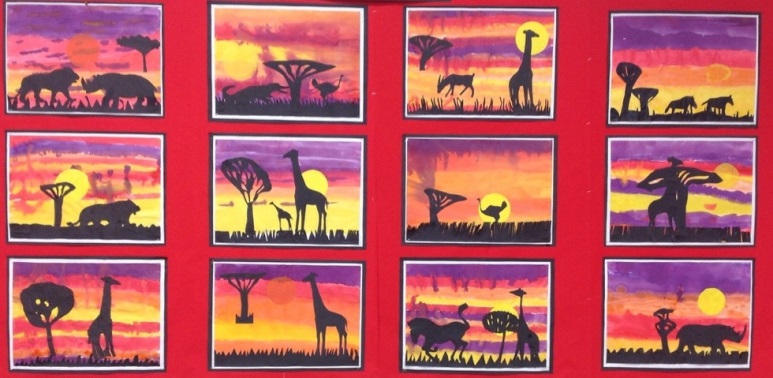
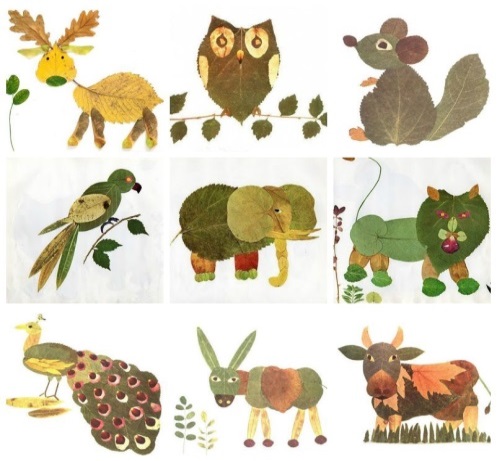
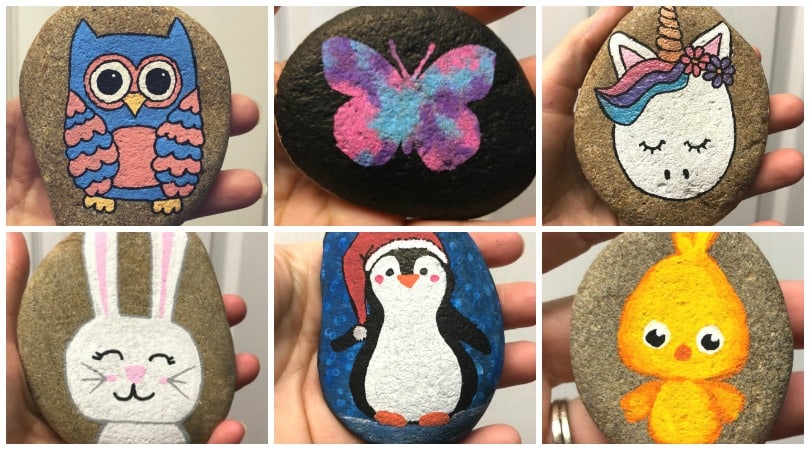
However, if this doesn’t appeal to you can still send any other art work to me and I will post that on the Blog too.
Please email your artwork to me:
n.pearson@stpeterswaterlooville.hants.sch.uk
Thank you
Keep creating and keep safe!
Mrs Pearson
Happy half term!
Half term is here! And what a strange term it has been, one we will remember forever. Well done for all of your hard work this term, we have enjoyed your emails of work. We think you all deserve a rest this half term so we will not be setting any formal homelearning. Please keep up with your reading for pleasure though – especially in the garden in this lovely weather! We will ensure my maths, sumdog and times tables rock stars are updated with work if you would like to do any maths too.
Stay safe and well Happy Hippos and Lovely Lions.
We can’t begin to explain how much we miss you and we wish you were back with us, always thinking of you,
Miss Shaw, Mrs Atkins and Mrs Pike
Friday 15th May 2020
Hello everyone! We hope you’re well and staying positive. We’re missing you lots but have really enjoyed hearing all about the wonderful things you’ve been getting up to with your families. This week, we’ve been doing lovely things with our families too…
Mrs Atkins has been spending yet more time in her garden. It’s a really interesting time outside in nature at the moment. She has spotted that the flowers on the fruit trees and bushes are falling off and in their place, fruits are forming. Look! Can you see? Can you identify these fruits from Mrs Atkins’s garden in the pictures below: blueberries, raspberries, apples and plums?
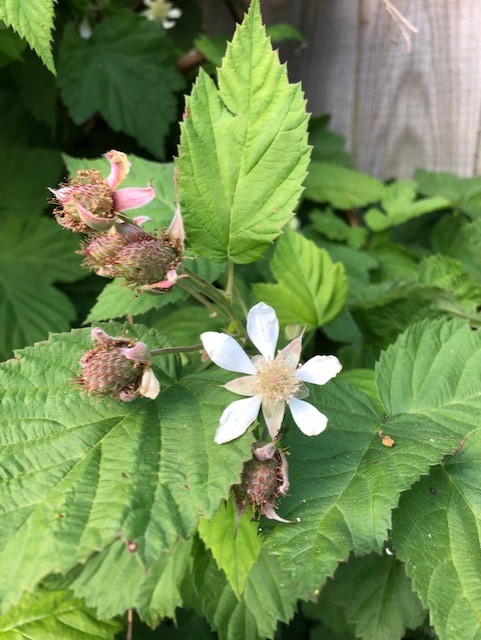
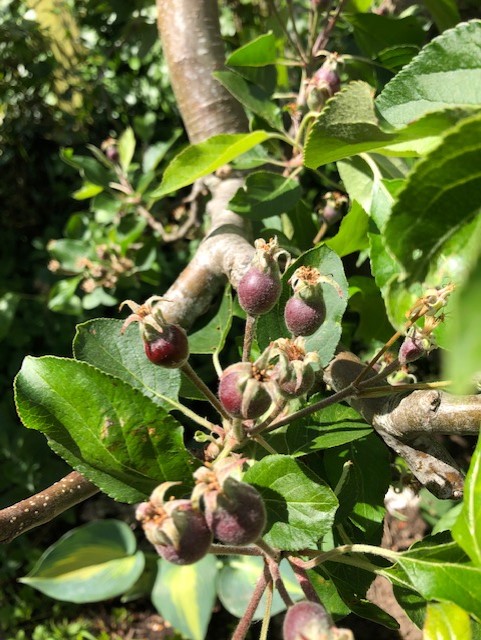

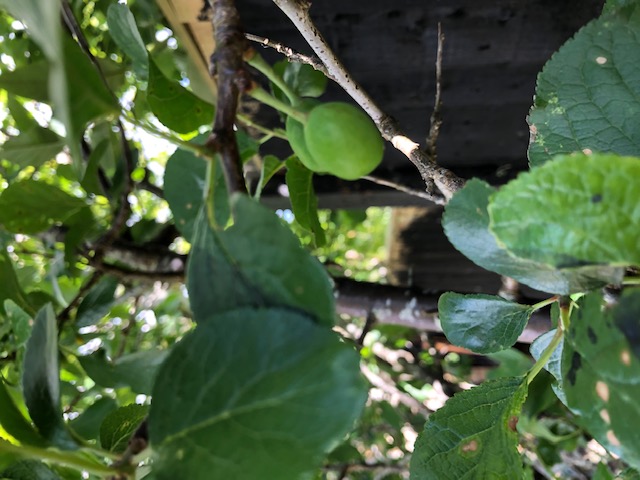
You might remember that Mrs Pike has been building her own home on the farm. She’s very excited to be moving in next week so this week has included a lot of painting and moving furniture! She has also squeezed in some baking and has made an apple Dorset cake.
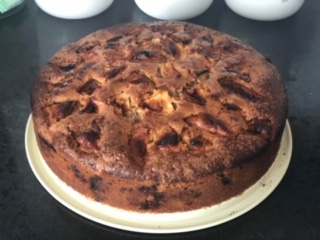
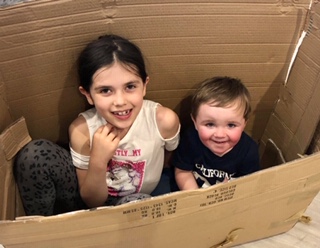
Miss Shaw has enjoyed spending time with her baby, Odi. Look how cute he is! Who knew there were so many unexplored walks around our area! There’s even a waterfall!

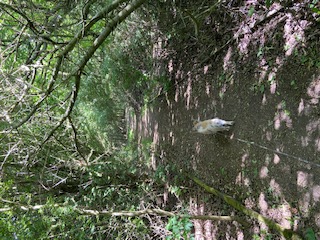
Here is the home learning for this week…
Topic:
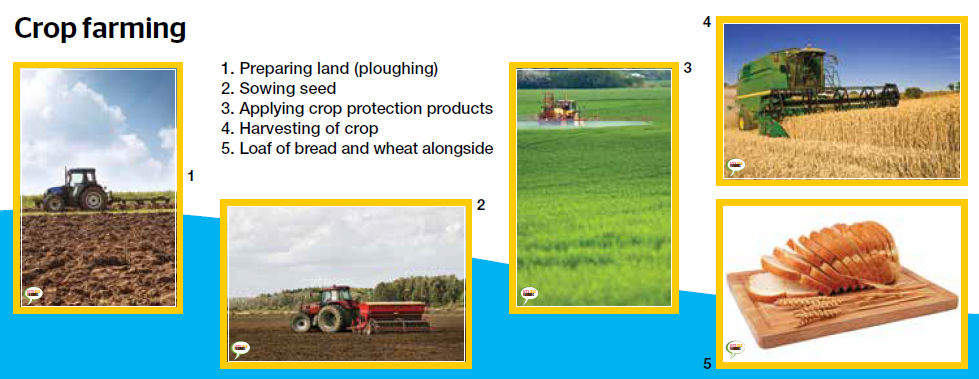
How would different weather affect each stage of farming? Consider the effect on different crops such as fruits, wheat, corn, grass (for animal feed), potatoes etc.
| Ploughing | Sowing | Crop Spraying | Harvesting | |
| Drought (No rain) | Land would be hard and difficult to plough. | |||
| Average Rain | ||||
| Heavy Rain/ Flooding | ||||
| High winds | Fruit could be blown off before collecting and become spoiled. | |||
| No wind |
CHALLENGE – What would ‘ideal’ weather look like for a wheat farmer vs a grass-fed cow farmer?
SUPPORT – Plant and grow any type of seed you can find in three pots of soil. In Pot 1, give it no water to simulate drought. In Pot 2, give it a constant supply of water to simulate heavy rain or a flood. In Pot 3, try to make sure there are optimum conditions (perfect for growing). Look closely to see what happens to the plants and the soil.
English: The magic tree.
Sentence challenge!
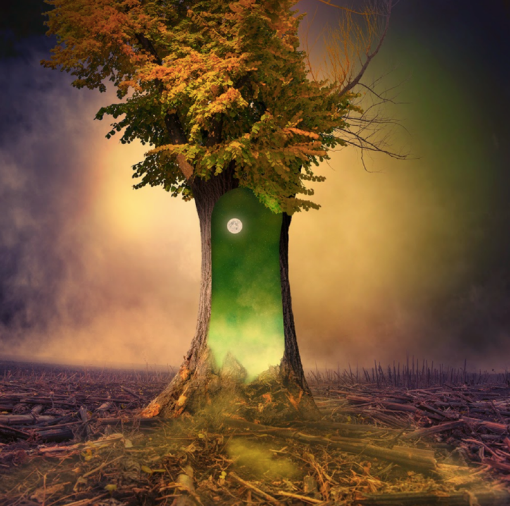
A preposition is a word that shows the relationship between one thing and another. It usually tell you where a thing is in relation to something else (the position) E.g. The green, shining door appeared inside the tree. Can you write a minimum of 3 sentences about this magic three that contain prepositions?
If this was a portal to another world, would you go through it or stay on Earth? If you walked through the portal, what would happen to you? What would you see?
Imagine you have just walked through the open portal and into the world inside the tree. Draw and then describe what you can see – remember to use fantastic adjectives to create expanded noun phrases.
Guided reading:
Hidden nature. Use the image to answer the questions, remember this is using your inference skills so there’s exact answer, it’s reading between the lines and using the clues to help.
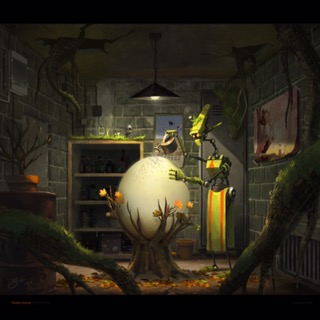
- Where did the robot get the egg from?
- Why is the robot watering the egg?
- How are things growing in this room?
- Why is he keeping it hidden?
- Does anyone else know it’s there?
- What do you think the world outside this room is like?
- Do you think the egg will hatch? What will be inside?
Science / Geography: Where does your food come from?
Think about / research what crops we grow in our country? Compare it to crops grown in other countries. Can you find out where certain foods come from? Use a map / globe to locate these places and label/ draw pictures of the food type in the correct place on a blank world map.
Challenge:
What do other countries grow that we don’t? Why can’t we grow certain foods in our country but they can in others? Present your findings in any way you wish (table, poster, information leaflet etc.)
Key vocabulary: Climate, biodiversity,
Use this website to support your learning:
https://www.cbd.int/ibd/2008/youth/farmers/
Maths
We have heard from other year groups that children are really enjoying these maths lesson from the national academy. They included a quiz, a teacher video, an activity to complete and an end quiz to check your learning. Here are the first two angle lessons. Give them a go and let us know what you think. Other children have enjoyed having a mini lesson from a teacher.
https://www.thenational.academy/year-3/maths/to-identify-and-recognise-angles-year-3-wk4-1
https://www.thenational.academy/year-3/maths/to-identify-angles-inside-2-d-shapes-year-3-wk4-2
Music from Mrs Sumba
Ravi Shankar
Go to the website below and watch Naomi Wilkinson’s video about Ravi Shankar.
https://www.bbc.co.uk/teach/ten-pieces/classical-music-ravi-shankar-symphony-finale/znk8bdm
Why is Shankar considered to be a musical trailblazer?
Now listen to the whole piece in the second video. Make a list of the different instruments you can see. Choose 1 and find out 3 facts about it.
Spelling
Pick words from the Year 3/4 Spelling List and practice them by writing them out in your neatest handwriting.
Art from Mrs Pearson :
Art Challenge Famous Landmarks:
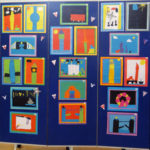
For this week’s Art Challenge I would like you produce some art that is linked to a famous landmark. Your landmark can be natural or man-made. It can be a drawing, a sculpture made from recycled materials, a collage, something made out of pebbles and twigs , it could be drawn on a tablet or made out of Lego, or indeed else that you can think of. I have even seen Big Ben made out of socks! Let you imaginations run wild!
Here are a few ideas:
Science from Miss Stapley
Balancing Structures
The activity – Make a balancing toy.
Experiment with the design of your toy to find out what affects whether or not it balances.
Learn about the centre of mass of an object and how it relates to whether or not something balances. https://www.rigb.org/docs/balancing_sculptures_infosheet_0_0.pdf – activity worksheet in full
What you need:
- A carrot or similar vegetable
- Kebab skewers
- Marshmallows and/or other jelly type sweets, or small pieces of carrot or similar hard vegetables.
- Plasticine or blu-tac
- 500ml soft drink bottle or washing up liquid bottle
Stage 1: Cut a piece of carrot about 3 cm long. Stick a kebab skewer into one end of the piece of carrot and break the skewer so that you have only 2 or 3 cm of it sticking out. Try to stand the carrot piece up on the end of the kebab skewer – you should find this very difficult, if not impossible to do.
Stage 2: Stick a kebab skewer into each side of the carrot so that they point downwards at about 45 degrees. Then stick a marshmallow or other jelly sweet onto the ends of the skewers, as shown in the picture below. Place this on top of a bottle and you should find that it balances.
Get children to investigate what happens when you slide the marshmallows up and down the ‘arms’ of the sculpture and if you add more marshmallows. Stick an additional two or more kebab skewers into the carrot and challenge children to add at least one item to each skewer and still keep the sculpture balanced.
Questions to ask children: With just central part of the sculpture: why doesn’t this stay balanced? Before showing them stage 2: do you think we can use more kebab skewers and anything else to help it balance? Why do you think it balances like this? What can we change? (position of skewers, items pushed onto the skewers, position of things on skewers) What do you think will happen if we change these things? What do you think we need to do to make sure our sculpture balances?
Going further:
Try making some animal-shaped balancing toys: http://bit.ly/AniBalance
Make a balancing butterfly: http://bit.ly/BalanceButterfly
Have a wonderful and safe weekend!
Miss Shaw, Mrs Atkins and Mrs Pike